 Your new post is loading...
The diverse team of eLearning advisors provide elearning workshops, send out periodic newsletter, provide customised consultation, support the eScholar program and more. Use the 'Filter' pull-down menu above to search for topics by keywords.
Via Kim Flintoff
MOOCs are like the patronising uncle who has yet to have a child of his own. They are great fun for the nieces and nephews, they are inventive, playful, and the kids always look forward to them arriving. But this uncle secretly (and after a couple of beers, not so secretly) thinks he could do a better job at raising the kids than the parents. He may also think they prefer him to their actual mum and dad. "Why don't they do all the stuff I do with them?" he thinks. "I'm great at getting them out of a tantrum, I do my distraction technique and they forget it. I never see their dad doing that," he compliments himself. "I would have a set of rules that the kids would respect and obey, not this slapdash approach," he vows.
I laid out my concerns with Massively Open Online Courses (MOOCs), understanding their rapid ascent within the confines of Gartner’s Hype Cycle. In doing so, my purpose was to suggest that the true innovations posed by MOOCs will be much different than what is commonly presumed. Ultimately, as MOOCs descend from the peak of inflated expectations, down through the trough of disillusionment, and onto a plateau of productivity, their impact will be less about the wholesale transformation of higher education and more about advancements in modes of learning that will decenter the learning process away from the traditional classroom lecture and empower students as both consumers and creators of knowledge. Simply put, the “Sage on the Stage” model of higher education ceases as the role of traditional gatekeepers are eroded and replaced with patterns of collaboration based on a “many to many” model. The traditional classroom lecture, rightfully so, is the first to go.
The recent announcement from the California State University System regarding its embrace of edX massive open online courses (MOOCs) is interesting and depressing at the same time. As with many aspects of the MOOC phenomenon, it comes packaged with good and bad aspects bundled up together. Instructors will offer a "special 'flipped' version of an electrical engineering course ... where students watch online lectures from Harvard and MIT at home." So the good is the flipped part because it's more interactive and dynamic and there's less lecture-based didacticism in the classroom due to watching videos at home? Really? The 1970s just called: they want their Open University courses back.
Read more: http://www.insidehighered.com/views/2013/05/06/essay-suggests-moocs-are-losing-their-original-worthy-goals#ixzz2TbmRiWWf ; Inside Higher Ed
Coursera, meanwhile, announced on Wednesday that it had created partnerships with a raft of companies and nonprofit groups that will work on translating its MOOCs into various foreign languages, including Arabic, Japanese, Kazakh, Portuguese, Russian, Turkish, and Ukrainian, which are the native tongues of a number of countries where Coursera’s English-language MOOCs have been popular.
There is substantial demand worldwide for American higher education, but experts have warned that MOOC providers that wish to serve a global audience face a challenge in accommodating various languages and cultures. And while many MOOCs are oriented to the common languages of mathematics and numbers, language barriers have caused some problems for MOOCs that rely on peer grading.
Via Learning Environments
A napster moment; the end of boring lectures; a tipping point. These are all common responses to the emergence of MOOCs – Massive Open Online Courses.
The Intersection of Technology, Free-Market Ideology, and Media Hype in U.S. Education Reform with Justin Reich, Berkman Center Fellow May 7, 12:30pm ET [New Location] Harvard Law School, Wasserstein Hall, Milstein East C [Event at Capacity] Please join webcast live at 12:30pm ET or view archived video on our site shortly after. For decades, policymakers and futurists have heralded digital tools as essential to the the future of learning. Has the moment of disruptive transformational revolution finally arrived? If we are at a watershed moment, what futures are available to us?
Researchers are developing new methods to leverage big data for personalized learning systems. Free-market advocates are envisioning how online learning could let students use vouchers not only to buy whole school experiences, but to buy individual courses from multiple vendors. Most radical of all, technologists and policymakers are exploring ways of using technology to "unbundle teaching", to create a suite of new roles in schools from rockstar teachers to full-time remote classroom observers, much as health care has shifted from the general practitioner to teams comprised of a few surgeons and many orderlies.
In this luncheon presentation we'll explore the different futures made possible by these digital tools, and examine the political and civic implications of transforming schools and learning with networked technologies.
The MOOC phenomenon has happened very quickly, to put it mildly. Last November, the New York Times declared 2012 to be “the Year of the MOOC,” and while it feels (at least to me) like we’ve been talking about MOOCs for years now, the speed by which the MOOC has become the future of higher education is worth thinking carefully about, both because it’s an important way to frame what is happening, and because that speed warps the narrative we are able to tell about what is happening. Coursera, Udacity, and edX are all less than a year old, and while the first two—which are silicon valley startups out of Stanford, essentially—have already enrolled millions of students, the non-profit consortium edX has grown just as prodigiously. Beginning as a partnership between Harvard and MIT, it now includes a dozen different universities, and that number will surely grow.
That's big news and it's going to be a shocking bit of news to all of Higher Ed. Competitor Computer Science programs now will look expensive and be forced to respond.
The industry chosen for analysis is the higher education services industry where incumbents are Universities and the disruptive technology the industry faces today is the MOOC (massive open online course) platform as provided by Coursera (among others).
A place to share ideas about massive open online courses, and to continue the dialogue from Campus...
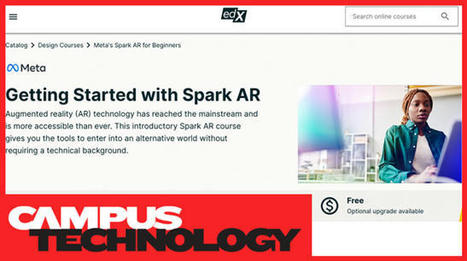
Campus Technology has launched a new Facebook Page for sharing ideas about massive open online courses.
EdX, the not-for-profit online learning enterprise founded by Harvard University and the Massachusetts Institute of Technology (MIT), today released its XBlock SDK to the general public under the Affero GPL open source license. XBlock is the underlying architecture supporting the rich, interactive course content found in edX courses. With XBlock, educational institutions are able to go far beyond simple text and videos to deliver interactive learning built specifically for the Internet environment. The release of the XBlock source code marks the first step toward edX's vision of creating an open online learning platform that mirrors the collaborative philosophy of MOOCs themselves and is an invitation to the global community of developers to work with edX to deliver the world's best and most accessible online learning experience.
|
Librarians are a major part of universities, but they're almost entirely missing from the MOOC conversation. That's a big mistake.
Via Craig Patterson
Nathan Heller of the New Yorker puts us in a dilemma with his picture of the MOOCs. We need sustainable MOOCs for a complete transformation of online education.
“It’s Mooc or die”, a university vice-chancellor has said, claiming that institutions must embrace the massive open online course movement and adapt their teaching methods or face a tough future.
Because of the highly collaborative and immersive experience virtual worlds offer, educators continue to explore the potential—and experience benefits—of teaching and learning in real-life replicated environments. Among these educators are Dr. Andrew Stricker, distributed learning architect for The Air University, and Dr. Cynthia Calongne, professor at Colorado Technical University—an inventive, trail-blazing duo dedicated to advancing the application of virtual worlds in education.
GEORGIA Institute of Technology plans to offer a $7000 online masters degree to 10,000 students over the next three years without hiring much more than a handful of new instructors.
Via Learning Environments
Welcome! We are doing a MOOC! A Games MOOC! Come join us for the Summer 2013 offering. Designed using the connectivism learning theory, the Games MOOC is a Massive Online Open Course focusing on game based learning in education. Connectivist MOOCs or cMOOCs started in 2008. Since then there have been a series of these free connectivism open online courses offered. The Games MOOC is informed by their design and implementation. Since it's a connectivism MOOC, it will not look like a course from Coursera. Besides connectivism learning theory, this MOOC is informed by gaming guild culture and the Gamer Disposition http://blogs.hbr.org/cs/2008/02/the_gamer_disposition.html If you would like to take a look at the Games MOOC site please go to http://gamesmooc.shivtr.com/ The Summer Games MOOC will be divided into two parts. Each part will be designed to be a standalone MOOC, so feel free to sign-up for only one part or both. Part I will focus on exploring collaboration, cross-functional teams and multi-player game based learning. We will take a close look at the features of multi-players games by going into MMORPGs (Massively Online Role-Playing Games) and also livestreaming from them. We will be exploring and even experiencing what makes these games so engaging. We will invite you in to explore and play in MMORPGs. Part I will run from June 3 - June 24, 2013. Part II will be a tour of online and immersive environments for game based learning. There will be an emphasis on you building your game based learning PLN (Personal Learning Network). We will visit multiple virtual learning environments, virtual worlds, sandbox games and MMORPGs. In Part II, we will also be collaborating with the rgMOOC, or "Rhetoric and Composition: The Persuasive Power of Video Games as Paratexts being offered by Sherry Jones and Kate Guthrie Caruso http://storify.com/sherryjones/rgmooc-a-rhetoric-and-game-based-mooc Part II will run from July 7 - July 29, 2013. The Games MOOC is an open course for all educators. The model for participation is based on social network knowledge construction. Learners will be able to be active in the course in several ways from lurking (reading the discussions), to being engaged in game-play to actively creating content in the course with the MOOC designer and Advisory Group. We do understand that a participant’s level of activity may vary based on the individual’s interest in the weekly topics or other time commitments. So feel free to lurk! As one of our MOOC Advisory Board member says, "Lurk and Learn!"
I'm not at all surprised to hear the accusation that revisionists have been sanitising the Wikipedia article on MOOCs - taking out the references to the early developers. It was recently revealed here in Australia, that this may be common practice for public relations service now.
QUT is looking to tap the power of analytics with a plan to mine data from multiple systems including massively open online courses.
The perils and promise of online learning.
A cruel MOOC forum exchange suggests an urgent need to outline guiding principles to help learners get the most out of MOOC peer-assessment.
There are multiple potential roles for libraries in the MOOC development, support, assessment, and preservation process, some of which have been more fully explored than others in the few months since Coursera and EdX began rolling out offerings.
In this contribution I address the question of assessing the quality of massive open online courses. The assessment of the quality of anything is fraught with difficulties, depending as it does on some commonly understood account of what would count as a good example of the thing, what factors constitute success, and how that success against that standard is to be measured. With massive open online courses, it is doubly more difficult, because of the lack of a common definition of the MOOC itself, and because of the implication of external factors in the actual perception and performance of the MOOC. Moreover, it is to my mind far from clear that there is agreement regarding the purpose of a MOOC to begin with, and without such agreement discussions of quality are moot. Let me begin, then, with a statement describing what I take a MOOC to be. I will then address what I believe ought to be the purpose of a MOOC, the success factors involved in serving that purpose, the design features that impact success, and finally, questions regarding the measurement of those features. This is a contribution to the MOOC Quality Project (which posted part 3, 'MOOC Success Factors, on the blog, with the final edited version intended for eventual publication somewhere, and possibly other sections on other blogs).
Many people think that massive open online courses, or MOOCs, are the future of higher education in America.
|