 Your new post is loading...
"The ability to remix RSS is very cool (remember YahooPipes?), but Inoreader takes that even farther because it also harvests non-RSS content from social network feeds at Twitter, Google+, and Facebook, rendering them as RSS. It's magic: you can recombine any of the content in Inoreader to send back out as an RSS stream, including social network content that is normally not available as RSS. Want an RSS feed of your Twitter? Facebook? Google+? Easy-peasy: you just subscribe to your feed with Inoreader, and then send it back out again as RSS."
How we choose to pay attention, and relate to information and each other shapes who we become, shapes our creative destiny and, in turn, shapes our experience of the world. And, in my mind, there’s nothing more important than that.
The back of your notebook will act like a tag list or index. Every time you create a new entry at the front of the book you’re going to “tag” it.
For example let’s imagine you’re keeping a notebook for recipes and you just wrote down a Chinese recipe on the first page.
Next you’d go to the last page and create the tag ‘Chinese’ by writing it on the first line right next to the papers left edge.
Now you’d go back to the first page where the recipe is and on the exact same line as the ‘Chinese’ label you just wrote you’d make a little mark on the right edge.
You’d make this mark so that even when the notepad was closed the mark would be visible. After repeating this for various recipes you’d now have various tags visible on the notebooks edge.
“We in the agency are at risk of a similar, collective paralysis in the face of a dizzying array of choices every single day,” the analyst wrote in 2011. “’Analysis paralysis’ isn’t only a cute rhyme. It’s the term for what happens when you spend so much time analyzing a situation that you ultimately stymie any outcome …. It’s what happens in SIGINT [signals intelligence] when we have access to endless possibilities, but we struggle to prioritize, narrow, and exploit the best ones.”
Digital storage of data has become an integral part of our lives, whether in the form of contacts and calendars on smartphones or constant access to the vast stores of knowledge in the cloud. Previous research has suggested that saving information makes us less likely to remember it, presumably because we assume we do not really need to memorize something that is saved. But doing so should also free up mental resources, reasoned cognitive scientists Benjamin Storm and Sean Stone, both at the University of California, Santa Cruz. They found in a new study that saving some information enhances memory for new material.
EPI-Search helps you find documents that are highly relevant to your topic of interest. You simply enter the full text of a source that is representative of your topic of interest.
Enter notes or a draft document in the search box. The results display related sources from our library and the Web.
Crawford first shows how highly skilled people learn to develop an intelligent use of space, filtering out what they can afford to ignore. Part of developing one’s skill is to know where to look, to "jig" the space to pay attention to what’s most important. And you learn what’s most important by paying attention to people whose skills are much more developed than your own.
A burgeoning collection of communication technologies is often blamed for decreased empathy and attention spans. What if the problem lies not with the technology, but with the attitude of the user?
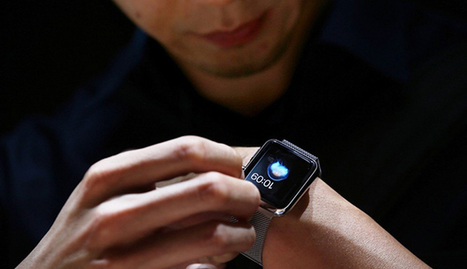
INDUSTRY experts are predicting that the brand new smartwatch unveiled by Apple yesterday will totally change the way people ignore each other when it launches in April.
The device, known simply as the Apple Watch, will host a range of exciting features which will enable users to cocoon themselves in their own little world, avoiding interaction with fellow human beings.
Pearltrees lets you organize all your interests
"We have multiple set exercises throughout the day where you basically bring intentionality to your attention," he told me over the phone. They involve no newfangled brain-training software, or really anything at all new to neuroscience or philosophy—which may be why it's easy to dismiss them. For example, he might tell a patient to take on little tasks like, when they wake up in the morning—instead of ruminating on the day ahead or idling on their phone—thinking about five people in their lives for whom they're grateful. Maybe even send those people a little note. That strengthens relationships and makes those people feel appreciated, sure, but the real point of it, Sood explained, is that "by choosing where to deploy your attention and what you're processing, you're basically strengthening your attention."
Theoretically a person could accomplish that same attention-building with other exercises—say, staring at a fish tank for a while, counting and naming the fish, and then introducing them aloud whenever one swims near another—but Sood likes to recommend practices that are more productive.
How much time do you spend talking to yourself? If you put the question this way, it often makes people uncomfortable. An alternative phrasing: how much time do you spend engaged in “directed conscious thought”? This is what Tim Wilson et al investigated in a new paper published in Science. It’s exactly the sort of work I’m looking forward to engaging with when I start my sociology of thinking project later in the year:
|
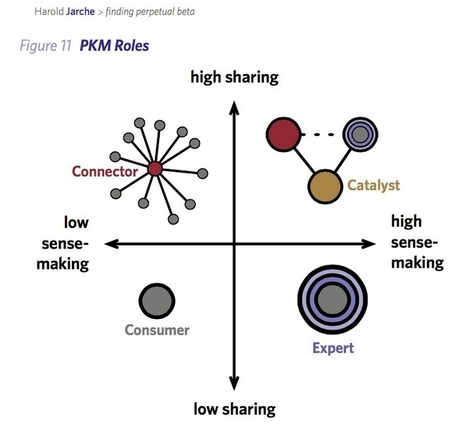
How do you make sense of all the data, information, and knowledge that passes by you each day? How do you connect with other professionals?
The discipline of PKM helps to develop four core work skills, identified by the Institute for the Future: sense-making; social intelligence; new media literacy; and cognitive load management.
The two aspects of being human that set us apart from other mammals are metacognition and the deep desire to belong or feel felt. Our sense of needing to belong to a group is an inherited part of our neurobiology, and collaboration with others is the desired outcome. Metacognition is our brains' miraculous innate ability to self-assess, think about our thinking, and reshape our perspectives.
Feeling the emotions of others, social acceptance, and cooperation are critical to our early development of the identity and industry stages. Author and motivational speaker Daniel Pink states that the future belongs to conceptual cooperative thinkers.
Media literacy helps us understand, analyze and create media. While we rely on good journalism to provide accurate information, we also have responsibilities of our own in this media-saturated environment. We can no longer be passive consumers of media. We need to be active users of media, as readers, listeners, viewers and creators, so we are all better informed. Our goal is to help you do just that.
Just because we may be allocating our attention differently as a function of the technologies we may be using, it doesn’t mean that the way our attention actually can function has changed,” Morton told the Ottawa Citizen. “Digital technologies dovetail seamlessly into the information processing abilities of our brain.”
The study further reveals that the rate at which humans now process information is faster than before handheld technology took hold of everyday life. Among the top four factors that impact attentions spans the most are media consumption, social media usage, technology adoption rates and multi-screening behaviors.
With regard to these factors, the study found that attention spans vary according to how one consumes media and at which rate they adopt to using it.
For example, those who adopt to social media the quickest are able to process information from interactive environments (TV) better than people who adopt to social media at a slower pace. Reversely, the so-called “late adopters” of social media tend to process information faster in non-interactive environments (not TV).
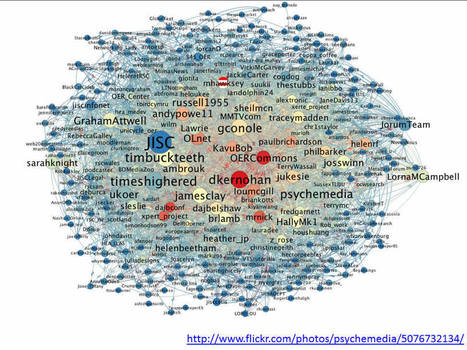
As I start my exploration of tools like NodeXL it's very clear that being able to filter, probe and wander through the data provides far more insights to what’s going on.
In this talk at the Royal Society of Arts in London, Daniel Levitin, a professor of psychology and behavioural neuroscience at McGill University in Canada, reveals the surprising effects that ‘information overload’ is having on our brains, and how we can best combat the data deluge. Some of the proven strategies, like taking short naps to recharge, could go beyond simply preventing brain drain and helping us maintain focus, but might actually make us better, more creative problem-solvers too. In fact, Levitin makes the case for regular daydreaming – 15 minutes every two hours – so that our brains benefit from a restorative mind-wandering mode, which he describes as their natural state.
It is estimated that we can think up to seventy thousand thoughts per day. It’s no wonder therefore, that our minds can go into “thought overload.” But a great way to avoid that is by practicing Mindfulness, and making an effort to stay in the present moment.
This webinar is all about leveraging the power of visual thinking and organization for design and project planning.
The thing is, the watch does have a use case, it's just one that’s hard for Apple to talk about. Last week Matthew Panzarino at TechCrunch wrote that the best thing about the watch, according to the Apple employees who’ve been demoing it, was that it let them basically stop using their phone. Instead of fishing their phones out of their pockets every couple minutes, they could check incoming notifications on the watch and choose to ignore or respond to them. Panzarino
Netvibes is known for a website that lets you pull all your favorite internet services onto a single page, from news sites to email to weather. But now it’s taking a different turn.
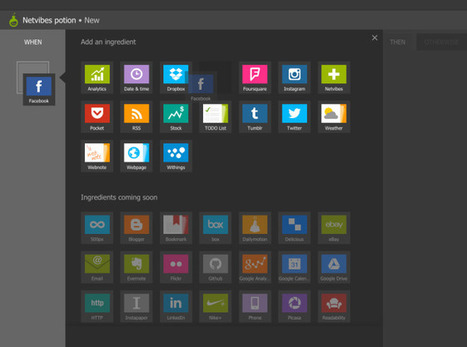
The Paris-based company will soon offer a new service dubbed Dashboard of Things, which aims to provide a single place you can not only consume all sorts of internet content, but also automate your digital life. With this new tool—which is being previewed now and will be widely available later this year—you could program Instagram to automatically backup your photos to Dropbox, or tell Twitter to send out a tweet every time you update your website.
For Netvibes CEO Freddy Mini, Dashboard of Things aims to help the average consumer do things they typically couldn’t pull off without some serious computer coding skills. “We need to make everyone a programmer,” he says. “We want you to be a wizard of the Internet of Things and to do magical things.”
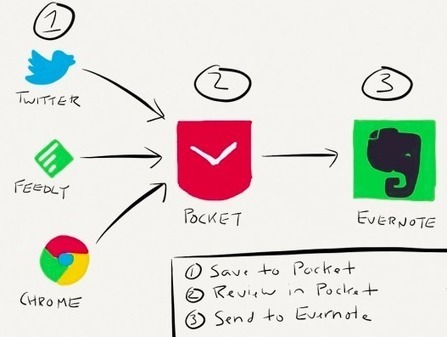
I needed a better way of getting what I wanted to keep in Evernote, but at the same time, keep Evernote clutter-free. Eventually, I came up with a process that has been working very well for me. It involves using Pocket, a “save for later” service like Instapaper. With Pocket, you can grab links, images, and videos and save them for later. Pocket also removes the clutter from the articles and presents them in an easy-to read format. Lots of applications integrate with Pocket, making it easy to send articles and other items. Best of all, you can send items from Pocket to Evernote.
AS much as we love our digital devices, many of us have an uneasy sense that they are destroying our attention spans. We skitter from app to app, seldom alighting for long. Our ability to concentrate is shot, right?
Research shows that our intuition is wrong. We can focus. But our sense that we can’t may not be a phantom. Paying attention requires not just ability but desire. Technology may snuff out our desire to focus.
|


 Scoop.it!






















RSS has become esoteric and we lost a lot of capability to mix and filter RSS feeds when Yahoo Pipes went down, but now people are showing how to regain those capabilities with inoreader