Education 2.0 & 3.0
174.2K views | +16 today
 
Rescooped by Yashy Tohsaku from Edumorfosis.it
onto Education 2.0 & 3.0
May 23, 6:10 PM
Scoop.it!

Metagnición: la última frontera humana en la era de la IA 

El Dr. José Ferrer lleva años haciéndole la misma pregunta a sus estudiantes y ejecutivos que asisten a sus cursos: ¿qué es metacognición? La respuesta más frecuente es alguna versión de esto: “son técnicas para estudiar mejor”, “son estrategias para memorizar”, “es como las nemotécnicas”. Quien responde así solo toca la superficie de esta habilidad o destreza fundamental. No poder definir adecuadamente este concepto, es un impedimento para su desarrollo y uso.

La metacognición no es una caja de trucos. No es una colección de acrónimos para recordar capitales del mundo. No es un método para repasar la noche antes del examen. Confundirla con eso sería como confundir la astronomía con saber identificar tres constelaciones a simple vista. Hay un solapamiento, sí; pero hay también una diferencia de naturaleza.


Via Edumorfosis
Edumorfosis's curator insight, May 23, 9:23 AM

El Dr. Ferrer plantea que la gran deficiencia del sistema educativo recae principalmente en la enseñanza excesiva de contenidos y destrezas, pero sin análisis, sin pensamiento, sin cuestionamiento, sin metacognición. Es por eso que se necesita diseñar experiencias de aprendizaje contextualizadas, lo más cercanas posible a la vida real, y evaluaciones auténticas donde el estudiante utilice lo que sabe, no lo que memoriza a corto plazo... 

Education 2.0 & 3.0
All about learning and technology
Curated by Yashy Tohsaku
Your new post is loading...
Scooped by Yashy Tohsaku
May 23, 8:37 PM
Scoop.it!

A neuroscientist's guide to future-proofing your brain and thinking smarter in the 21st Century

A neuroscientist's guide to future-proofing your brain and thinking smarter in the 21st Century | Education 2.0 & 3.0 | Scoop.it
In her new book, The 21st Century Brain, scientist Hannah Critchlow explores the overlooked skills that will be necessary to flourish in the age of AI – and how we can cultivate them.
No comment yet.
Scooped by Yashy Tohsaku
May 23, 6:06 PM
Scoop.it!

Higher Education LMS: An Evaluation Framework For Universities

Higher Education LMS: An Evaluation Framework For Universities | Education 2.0 & 3.0 | Scoop.it
Choosing a higher education LMS? Use this practical framework to evaluate integrations, accessibility, reporting, and governance.
No comment yet.
Scooped by Yashy Tohsaku
May 23, 6:02 PM
Scoop.it!

The Future Is Too Important to Leave to the Algorithms

The Future Is Too Important to Leave to the Algorithms | Education 2.0 & 3.0 | Scoop.it
Why uncertainty is essential for creativity, democracy, and human freedom.
No comment yet.
Scooped by Yashy Tohsaku
May 23, 5:59 PM
Scoop.it!

A neuroscientist's guide to future-proofing your brain and thinking smarter in the 21st Century

A neuroscientist's guide to future-proofing your brain and thinking smarter in the 21st Century | Education 2.0 & 3.0 | Scoop.it
In her new book, The 21st Century Brain, scientist Hannah Critchlow explores the overlooked skills that will be necessary to flourish in the age of AI – and how we can cultivate them.
No comment yet.
Rescooped by Yashy Tohsaku from e-learning-ukr
May 22, 6:05 PM
Scoop.it!

Instructional Design Degree: Do You Need One In 2026? A Practical Guide For Teachers Transitioning Into ID

Instructional Design Degree: Do You Need One In 2026? A Practical Guide For Teachers Transitioning Into ID | Education 2.0 & 3.0 | Scoop.it
What Is An Instructional Design Degree? An Instructional Design degree prepares professionals to create effective learning experiences for schools, businesses, and digital training environments. The field combines learning science, technology, and communication to help people gain knowledge and appl

Via Vladimir Kukharenko
Rescooped by Yashy Tohsaku from Educational Technology News
May 22, 6:04 PM
Scoop.it!

Do You Like AI Because AI Likes You? How AI Flattery Crosses Signals

Do You Like AI Because AI Likes You? How AI Flattery Crosses Signals | Education 2.0 & 3.0 | Scoop.it
The AI models and chatbots that we interact with tend to affirm our feelings and viewpoints — more so than people do, with potentially worrisome consequences.

Via EDTECH@UTRGV
EDTECH@UTRGV's curator insight, May 22, 11:07 AM

"AI models offer affirmations more often than people do, even for morally dubious or troubling scenarios."

Scooped by Yashy Tohsaku
May 21, 6:09 PM
Scoop.it!

How Google Is Starting to Win the A.I. Race - The New York Times

How Google Is Starting to Win the A.I. Race - The New York Times | Education 2.0 & 3.0 | Scoop.it
Despite its early stumbles, Google’s Gemini has leapfrogged ChatGPT in relevance and usefulness. Soon, it will be ubiquitous.
No comment yet.
Scooped by Yashy Tohsaku
May 21, 3:22 PM
Scoop.it!

An Online Form Builder for Education: Everything You Need to Know About Jotform for Teachers

An Online Form Builder for Education: Everything You Need to Know About Jotform for Teachers | Education 2.0 & 3.0 | Scoop.it
Looking for a simple form builder for your classroom? Jotform for teachers is a no-code tool for permission slips, surveys, and more.
No comment yet.
Rescooped by Yashy Tohsaku from 21st Century Learning and Teaching
May 21, 2:02 PM
Scoop.it!

Says Lack of Semantics Causes Inaccurate AI Agents and Wasted Spending

Says Lack of Semantics Causes Inaccurate AI Agents and Wasted Spending | Education 2.0 & 3.0 | Scoop.it

Cutting Corners on Data Context and Semantic Foundations Will Increase Costs
Neglecting semantics will cause AI agents to be inaccurate and inefficient, exposing organizations to wasted spending and increased data and AI governance vulnerabilities, said Gartner, Inc., a business and technology insights company.


Learn more / En savoir plus / Mehr erfahren:


https://www.scoop.it/topic/21st-century-learning-and-teaching?tag=AI


https://www.scoop.it/topic/21st-century-learning-and-teaching?tag=Gust-MEES


Via Gust MEES
Gust MEES's curator insight, May 20, 7:04 PM

Cutting Corners on Data Context and Semantic Foundations Will Increase Costs
Neglecting semantics will cause AI agents to be inaccurate and inefficient, exposing organizations to wasted spending and increased data and AI governance vulnerabilities, said Gartner, Inc., a business and technology insights company.


Learn more / En savoir plus / Mehr erfahren:


https://www.scoop.it/topic/21st-century-learning-and-teaching?tag=AI


https://www.scoop.it/topic/21st-century-learning-and-teaching?tag=Gust-MEES


Rescooped by Yashy Tohsaku from Schools + Libraries + Museums + STEAM + Digital Media Literacy + Cyber Arts + Connected to Fiber Networks
May 21, 2:01 PM
Scoop.it!

Podcast: 100 Objects #1: The Century Safe | 99PercentInvisible.org

Podcast: 100 Objects #1: The Century Safe | 99PercentInvisible.org | Education 2.0 & 3.0 | Scoop.it

A locked iron safe, sealed for a hundred years. Which objects did Americans choose to tell their story? “The Century Safe” was designed as a time capsule. In 1876, as America celebrated its 100th birthday, a group of citizens filled the safe with objects they trusted to tell the country’s story — to be opened


Via Chuck Sherwood, Former Senior Associate, TeleDimensions, Inc
No comment yet.
Rescooped by Yashy Tohsaku from AI for All
May 21, 2:00 PM
Scoop.it!

Can you trademark identity? The new legal strategy celebrities are using against AI

Can you trademark identity? The new legal strategy celebrities are using against AI | Education 2.0 & 3.0 | Scoop.it

"It’s a relatively new legal tactic and not yet tested in court...."


Via Leona Ungerer
No comment yet.
Rescooped by Yashy Tohsaku from Edumorfosis.it
May 21, 2:00 PM
Scoop.it!

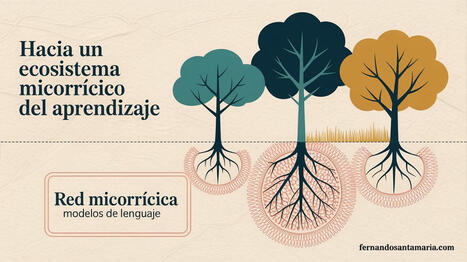
Hacia un ecosistema micorrícico del aprendizaje en la era de los modelos de lenguaje

Hacia un ecosistema micorrícico del aprendizaje en la era de los modelos de lenguaje | Education 2.0 & 3.0 | Scoop.it

El conectivismo nació, hace exactamente dos décadas, para nombrar algo que las teorías de aprendizaje anteriores no podían acomodar (Siemens, 2005). El cognitivismo seguía pensando el aprendizaje como almacenamiento individual de representaciones mentales. El constructivismo lo entendía como construcción interna de esquemas. Ambos enfoques colocaban al sujeto en el centro y trataban la red de información como un entorno externo del que el sujeto extrae materiales. El conectivismo desplazó ese centro. Propuso que el aprendizaje, en la era digital, ya no se explica adecuadamente sin atender a la red de conexiones que el sujeto consigue construir, mantener y atravesar. El conocimiento, en esta formulación, ya no reside íntegramente en la cabeza del aprendiz, sino en la red.


Via Edumorfosis
Edumorfosis's curator insight, May 21, 10:38 AM

Fernando Santamaría sostiene que el Conectivismo Clásico ya no nos sirve para nombrar lo que ocurre cuando un estudiante universitario aprende en 2026. No porque sea falsa, sino porque es insuficiente. Hay algo en los modelos IA que los postulados conectivistas no pueden albergar. Y ese algo coincide, sospechosamente, con lo que la irrupción de los modelos de lenguaje a gran escala han hecho con nuestras prácticas docentes. Lo que presenta es una propuesta de cambio de metáfora, con todo lo que esta podría arrastrar... 

Rescooped by Yashy Tohsaku from Educational Technology News
May 21, 1:59 PM
Scoop.it!

How AI Is Changing Teaching Workflows

How AI Is Changing Teaching Workflows | Education 2.0 & 3.0 | Scoop.it

"Teachers in the U.S. spend an average of seven hours per week on lesson planning alone, plus another three for students with diverse needs. That’s before grading, parent emails, IEP documentation, and the administrative overhead that has made teaching among the highest-burnout professions in the country."


Via EDTECH@UTRGV
EDTECH@UTRGV's curator insight, May 21, 11:07 AM

"AI is saving teachers meaningful time. Whether that eases burnout depends on where the time goes."

Rescooped by Yashy Tohsaku from Edumorfosis.it
May 23, 6:10 PM
Scoop.it!

Metagnición: la última frontera humana en la era de la IA 

El Dr. José Ferrer lleva años haciéndole la misma pregunta a sus estudiantes y ejecutivos que asisten a sus cursos: ¿qué es metacognición? La respuesta más frecuente es alguna versión de esto: “son técnicas para estudiar mejor”, “son estrategias para memorizar”, “es como las nemotécnicas”. Quien responde así solo toca la superficie de esta habilidad o destreza fundamental. No poder definir adecuadamente este concepto, es un impedimento para su desarrollo y uso.

La metacognición no es una caja de trucos. No es una colección de acrónimos para recordar capitales del mundo. No es un método para repasar la noche antes del examen. Confundirla con eso sería como confundir la astronomía con saber identificar tres constelaciones a simple vista. Hay un solapamiento, sí; pero hay también una diferencia de naturaleza.


Via Edumorfosis
Edumorfosis's curator insight, May 23, 9:23 AM

El Dr. Ferrer plantea que la gran deficiencia del sistema educativo recae principalmente en la enseñanza excesiva de contenidos y destrezas, pero sin análisis, sin pensamiento, sin cuestionamiento, sin metacognición. Es por eso que se necesita diseñar experiencias de aprendizaje contextualizadas, lo más cercanas posible a la vida real, y evaluaciones auténticas donde el estudiante utilice lo que sabe, no lo que memoriza a corto plazo... 

Scooped by Yashy Tohsaku
May 23, 6:05 PM
Scoop.it!

Storytelling Podcasts For Instructional Designers And Educators

Storytelling Podcasts For Instructional Designers And Educators | Education 2.0 & 3.0 | Scoop.it
Explore the world of storytelling podcasts that engage listeners with captivating narratives and memorable lessons.
No comment yet.
Scooped by Yashy Tohsaku
May 23, 6:00 PM
Scoop.it!

A neuroscientist's guide to future-proofing your brain and thinking smarter in the 21st Century

A neuroscientist's guide to future-proofing your brain and thinking smarter in the 21st Century | Education 2.0 & 3.0 | Scoop.it
In her new book, The 21st Century Brain, scientist Hannah Critchlow explores the overlooked skills that will be necessary to flourish in the age of AI – and how we can cultivate them.
No comment yet.
Rescooped by Yashy Tohsaku from e-learning-ukr
May 22, 6:05 PM
Scoop.it!

organizational knowledge – Harold Jarche

organizational knowledge – Harold Jarche | Education 2.0 & 3.0 | Scoop.it

Via Vladimir Kukharenko
No comment yet.
Rescooped by Yashy Tohsaku from Educational Technology News
May 22, 6:05 PM
Scoop.it!

Should Schools Get Rid of Homework? The Answer is Complex and AI Contributes

Should Schools Get Rid of Homework? The Answer is Complex and AI Contributes | Education 2.0 & 3.0 | Scoop.it
Some experts worry that less homework could be a problem for math achievement, at a time when test scores nationwide are already at a dismal low.

Via EDTECH@UTRGV
EDTECH@UTRGV's curator insight, May 22, 11:03 AM

"The debate over homework has swung back and forth for more than a century, and the tide of public opinion has shifted every few years. It’s likely to continue changing for a simple reason: Researching homework is a challenge."

Rescooped by Yashy Tohsaku from Educational Technology News
May 22, 6:04 PM
Scoop.it!

What Are Future-Ready Skills?: Preparing Students for Lifelong Success

What Are Future-Ready Skills?: Preparing Students for Lifelong Success | Education 2.0 & 3.0 | Scoop.it
Discover practical ways educators can foster future-ready skills such as collaboration, emotional awareness, creativity, and time management.

Via EDTECH@UTRGV
EDTECH@UTRGV's curator insight, May 22, 11:10 AM

"Future-ready skills are essential for shaping confident, capable, and compassionate individuals. While academic knowledge forms the foundation of education, these skills enable students to communicate effectively, solve problems, work collaboratively, and adapt to changing environments."

Scooped by Yashy Tohsaku
May 21, 3:32 PM
Scoop.it!

'A' grades are suddenly everywhere since the arrival of ChatGPT

'A' grades are suddenly everywhere since the arrival of ChatGPT | Education 2.0 & 3.0 | Scoop.it
AI is accelerating grade inflation, new research indicates, and making it harder for employers to assess new college graduates
No comment yet.
Scooped by Yashy Tohsaku
May 21, 2:03 PM
Scoop.it!

Engagement Doesn't Cause Achievement. It Still Might Be the Most Important Thing in School.

Engagement Doesn't Cause Achievement. It Still Might Be the Most Important Thing in School. | Education 2.0 & 3.0 | Scoop.it
I believe we should care about it more, not less. Here's why.
No comment yet.
Rescooped by Yashy Tohsaku from e-learning-ukr
May 21, 2:01 PM
Scoop.it!

How to get your research found on Google Scholar

How to get your research found on Google Scholar | Education 2.0 & 3.0 | Scoop.it
If people can’t find or access your work, they won’t cite it. Here, Darshan Vigneswaran explains how to ensure your academic articles surface in search and contribute to building your profile

Via Vladimir Kukharenko
No comment yet.
Rescooped by Yashy Tohsaku from e-learning-ukr
May 21, 2:01 PM
Scoop.it!

From AI Tutors to AI Study Mates - by Dr Philippa Hardman

From AI Tutors to AI Study Mates - by Dr Philippa Hardman | Education 2.0 & 3.0 | Scoop.it
New research reveals how AI can enable real learning — not just productivity gains

Via Vladimir Kukharenko
No comment yet.
Rescooped by Yashy Tohsaku from Edumorfosis.it
May 21, 2:00 PM
Scoop.it!

Hacia un ecosistema micorrícico del aprendizaje en la era de los modelos de lenguaje

Hacia un ecosistema micorrícico del aprendizaje en la era de los modelos de lenguaje | Education 2.0 & 3.0 | Scoop.it

El conectivismo nació, hace exactamente dos décadas, para nombrar algo que las teorías de aprendizaje anteriores no podían acomodar (Siemens, 2005). El cognitivismo seguía pensando el aprendizaje como almacenamiento individual de representaciones mentales. El constructivismo lo entendía como construcción interna de esquemas. Ambos enfoques colocaban al sujeto en el centro y trataban la red de información como un entorno externo del que el sujeto extrae materiales. El conectivismo desplazó ese centro. Propuso que el aprendizaje, en la era digital, ya no se explica adecuadamente sin atender a la red de conexiones que el sujeto consigue construir, mantener y atravesar. El conocimiento, en esta formulación, ya no reside íntegramente en la cabeza del aprendiz, sino en la red.


Via Edumorfosis
Edumorfosis's curator insight, May 21, 10:38 AM

Fernando Santamaría sostiene que el Conectivismo Clásico ya no nos sirve para nombrar lo que ocurre cuando un estudiante universitario aprende en 2026. No porque sea falsa, sino porque es insuficiente. Hay algo en los modelos IA que los postulados conectivistas no pueden albergar. Y ese algo coincide, sospechosamente, con lo que la irrupción de los modelos de lenguaje a gran escala han hecho con nuestras prácticas docentes. Lo que presenta es una propuesta de cambio de metáfora, con todo lo que esta podría arrastrar... 

Rescooped by Yashy Tohsaku from Educational Technology News
May 21, 2:00 PM
Scoop.it!

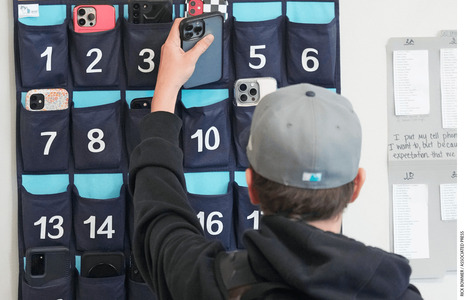
Can Banning Cellphones Save Student Learning?

Can Banning Cellphones Save Student Learning? | Education 2.0 & 3.0 | Scoop.it
Evidence from Florida, home of the first statewide mandate

Via EDTECH@UTRGV
EDTECH@UTRGV's curator insight, May 21, 11:06 AM

"70 percent of school principals—and 81 percent of middle and high school principals—believe cellphone bans have a positive impact on school climate. However, bans are less popular with students."