Your new post is loading...
Gov. Whitmer joined the Michigan Department of Labor and Economic Opportunity’s Michigan High Speed Internet Office (MIHI) in celebrating Michigan’s receipt of $920 million in federal funds to administer the Broadband Equity, Access, and Deployment (BEAD) program and continue expanding high-speed internet access statewide -- the single largest investment in high-speed internet infrastructure in Michigan and the nation’s history. The private sector will contribute $550 million in matching funds, bringing the total upcoming investment in Michigan’s high-speed internet infrastructure to $1.47 billion.
The long-sought program could ease cost and climate risks — especially if it lets renewable energy secured by tech giants avert a big buildout of gas…
Good afternoon. What an honor it is to be here at the National Press Club among so many thought leaders and colleagues. I’m grateful to the Free State Foundation and Randy May for his leadership and for inviting me to speak to you today—and for the remarkably subtle, understated, barely noticeable publicity devoted to this event over the last three months. So truly, Randy, no pressure at all for me up here! For decades, Free State has championed the bedrock principles that underpin American flourishing—limited government, free markets, and respect for the rule of law. From my earliest days in telecom law, Free State’s scholarship and conferences challenged how I thought about these issues. I’ve learned a tremendous amount from their work, and Free State’s analysis continues to inform how I approach my own responsibilities as NTIA Administrator. That certainly applies to my current work overseeing the $42 billion BEAD program and ensuring it fulfills its core mission of ensuring broadband availability throughout the country.
Traverse City, Michigan’s public, community-owned utility, Traverse City Light and Power (TCL&P), is putting the finishing touches on its $14 million plan to deliver affordable fiber to the community of 15,424. With build out estimates significantly lower than initial projections, the utility is finalizing an additional $1 million in loans to fund the recently started build.
SpaceX’s Starlink is poised to receive $661 million in government funds as all 50 states move forward with their plans to expand high-speed internet in underserved regions. California submitted its final proposal for a cut of the $42.5 billion Broadband Equity, Access, and Deployment (BEAD) program this week, the last US state to do so. So, we now have a better understanding of how the US will allocate the funds, which are already being distributed. Wes Robinson, a director at Texas-based Eastex Telephone Cooperative, has been tracking the numbers from each state’s BEAD proposal and found that close to $1 billion will go to satellite services, including Starlink and its upcoming competitor Amazon Leo.
A detailed investigation reveals that the e-commerce
behemoth Amazon is using its market dominance and political influence to gain a foothold in local governments' purchasing systems, locking school districts into contracts that let the corporation drive up prices for pens, sticky notes, and other basic supplies. The new report by the Institute for Local Self-Reliance (ILSR), titled Turning Public Money Into Amazon’s Profits: The Hidden Cost of Ceding Government Procurement to a Monopoly Gatekeeper, is based on purchasing records from nearly 130 cities representing more than 50 million Americans.
Netflix announced early Friday morning that it has an $82.7 billion deal in place to acquire most of Warner Bros. Discovery (WBD), a company that’s itself a flailing and failing product of several previously touted mega-mergers. Netflix is the big winner in a bidding war with Comcast and Larry Ellison & Son’s Paramount. But it’s hard to have much of a rooting interest in the Mind Flayers vs. the Nepo Babies because the losers in mega-deals like this are always creators, writers, workers and the rest of us sitting in the audience. Legendary activist and actor Jane Fonda published an Op-Ed in The Ankler on Thursday before the deal was officially announced, warning of the dangers of a WBD takeover by any of these suitors and urging her fellow creators to speak out.
DENVER, Dec. 1, 2025 —Today, the Colorado Broadband Office (CBO), under the Governor’s Office of Information Technology (OIT), announced that the National Telecommunications and Information Administration (NTIA) has approved Colorado’s Final Proposal under the Broadband Equity Access and Deployment (BEAD) program, unlocking $420.6 million in federal funding from the Infrastructure, Investment and Jobs Act (IIJA) for the state’s broadband infrastructure.
- Netflix says deal benefits workers, consumers and innovation
- DOJ antitrust head has listed those themes as priorities
- Republicans warn deal reduces consumer choice, increases Netflix's market share
Dec 5 (Reuters) - Some members of Congress on Friday deemed Netflix's (NFLX.O), opens new tab $72 billion proposed acquisition of Warner Bros Discovery's studios and streaming unit an antitrust "nightmare" for consumers and creatives, while the company touted the deal as driving value for viewers, workers and shareholders. Netflix said the deal would create jobs and give its 300 million subscribers "more bang for their buck" by adding content at a time when President Donald Trump's administration is focused on lowering prices.
- India reviews telecom industry proposal for always-on location tracking
- Apple, Google, Samsung oppose due to privacy, security concerns
- No precedent for such device-level location tracking, experts say
- India this week revoked an order requiring state-run app in phones
NEW DELHI, Dec 5 (Reuters) - India's government is reviewing a telecom industry proposal to force smartphone firms to enable satellite location tracking that is always activated for better surveillance, a move opposed by Apple, Google and Samsung due to privacy concerns, according to documents, emails and five sources. A fierce privacy debate erupted in India this week after Prime Minister Narendra Modi's government was forced to rescind an order requiring smartphone makers to preload a state-run cyber safety app on all devices after activists and politicians raised concerns about potential snooping.
Public Knowledge, Free Press and TechFreedom staged a protest outside of the 2025 Federal Communications Bar Association's annual dinner. On the evening of December 3, the Federal Communications Bar Association (FCBA) held its 37th Annual Dinner, hosting more than 1,500 telecommunications and technology policy professionals – including some of Public Knowledge’s own staff. As in years past, the Federal Communications Commission chair is a featured speaker, and many FCC staffers, including its commissioners, attend the dinner. Public Knowledge staff who normally attend the dinner asserted that attending this year felt different. The FCBA dinner is, at least partly, intended to raise money to provide college scholarships to students – an important cause to ensure a robust pipeline of quality graduates find their way into the tech policy space (including to organizations like Public Knowledge). But it also gives the FCC chair a platform for a speech in the form of a comedic set. At a time when Chairman Brendan Carr has been using regulatory power to silence President Trump’s critics and reward his allies, including attacks on Jimmy Kimmel (which temporarily forced the comedian’s show off the air in September) and new attacks on Seth Meyers, another late-night comedian, just last month, we bristled at the idea of Chairman Carr using his right to free speech in a standup performance while bullying comedians for doing the same. Chairman Carr has not hesitated to publicly threaten to punish media who step “out of line” by revoking their broadcast licenses.
Chairman Carr’s threats clearly weaponize the agency against media who disagree with the Trump administration – and they also clearly strike at the First Amendment protection of free speech and a free press.
The European Commission announced Friday that it was fining Elon Musk, the richest person in the world, for the equivalent of $140 million, saying his company X had breached Europe’s Digital Services Act. The act, which took effect around the same time Musk bought Twitter for $44 billion in 2022, is a kind of digital rulebook meant to crack down on illegal or potentially harmful content. Vice President JD Vance, before the fine was even finalized, slammed the commission, claiming that it was targeting US companies.
The European Commission has fined Elon Musk’s X €120 million (around $140 million) for breaching its transparency rules under the Digital Services Act. The European Union’s executive arm announced that it was investigating the social media company’s blue checkmarking verification system — first introduced when it was still known as Twitter — last year, along with other alleged DSA violations. Today’s verdict concerns the "deceptive design" of the checkmark, as well as "the lack of transparency of [X's] advertising repository, and the failure to provide access to public data for researchers."
|
- The House’s move to advance permitting reform sparked mixed reactions
- Rep. Pallone opposed a bill that mandates deadlines for state and local permit review
- Legislation may have minimal BEAD impact, a consultant told us
The broadband industry has long complained about cumbersome permitting processes, but the legislative gears are starting to turn on reform. The U.S. House Energy and Commerce Committee approved Wednesday a batch of seven broadband permitting bills, which will advance to the full House for a vote. Most of the legislation is geared toward improving the permitting process on federal lands, but one bill – H.R.2289, the American Broadband Deployment Act of 2025 – aims to overhaul permitting across the federal, state and local levels.
The virtual listening session will be held on December 10, 2025, from 12:00 p.m. to 1:30 p.m., Eastern Standard Time.
Executive Summary Major players in the wireless industry are disputing EchoStar/DISH’s attempt to claim force majeure to excuse them from lease obligations. Local governments, and traditional real estate owners, should be aware of the litigation and consider the potential outcome before accepting DISH’s claims. Background A U.S. Department of Justice condition on T-Mobile’s 2019 acquisition of Sprint was the divestiture or sale of some Sprint-held spectrum. The required sale was to support a fourth national facilities-based wireless carrier – and thus was born “DISH Wireless.” During the past five years, DISH sought to build out a national network, but in August 2025, EchoStar, the satellite company that merged with DISH in 2024, pivoted. The company announced the sale of spectrum licenses to AT&T and plans to operate as a hybrid mobile network operator (MNO) using AT&T’s network for connectivity under the label Boost Mobile.
COMMENTARY | A new federal program to transform rural healthcare will rely on patients and providers having strong internet, otherwise we risk deepening existing disparities.
Mauricio Rodriguez joins Chris Mitchell to talk about permitting challenges, land negotiations, environmental surprises, and why setting standards and hiring the right people early is key to actually getting fiber in the ground.
The words on everyone’s mind, in discussions about AI’s diffusion through the economy, are “fear” and “trust.” There’s too much “fear” of AI, you see, especially from workers. The important thing is to build people’s “trust” in the technology. These shortcomings of the American proletariat are typically lamented with some combination of condescension and frustration at the failure to comprehend the promise of progress and the imperative to pursue it. And they are contrasted with the brave, bold, forward-looking attitude in China, where enthusiastic citizens are embracing the opportunity… to do things like strap brain-monitoring headbands on elementary school students. But perhaps American workers are fearful of technological disruption because “experts” have spent the last generation telling them that technological disruption is responsible for their hardship. As I observed back in 2018 and have been arguing ever since:
Fei-Fei Li — one of the most influential leaders in AI — explains why artificial intelligence isn't just another tech trend. Fei-Fei Li is a prominent computer scientist, professor at Stanford University, and a leading figure in the field of artificial intelligence (AI), often called the "godmother of AI". She is the co-director of the Stanford Institute for Human-Centered AI (HAI) and is best known for inventing ImageNet, a large-scale visual database that helped launch the modern era of deep learning.
At a Glance - History of connectivity challenges in Western Massachusetts and the move to embark on a middle-mile project in 2008 (03:00)
- The role of municipal light plants and Westfield Gas & Electric (WG&E) in achieving the towns' last-mile vision (08:50)
- Overcoming hurdles created by the state and private providers, results and lessons learned (21:10)
In a new report published in November, the Institute for Local Self-Reliance (ILSR) goes inside the story of Western Massachusetts and how 19 towns took their broadband futures into their own hands by building out municipal networks.
MUMBAI, Dec 5 (Reuters) - A potential artificial intelligence bubble will deflate faster than past tech cycles but give way to an even stronger rebound as corporate adoption catches up with infrastructure spending, the head of Japanese IT company NTT DATA Inc. said. "There is absolutely no doubt that in the medium- to long-term, AI is a massive secular trend," he said. "Over the next 12 months, I think we're going to have a bit of a normalisation ... It'll be a short-lived bubble, and (AI) will come out of it stronger."
- Netflix's $27.75 a share bid tops Paramount's offer
- Combining leading streaming players to draw antitrust scrutiny
- Deal to boost US production, original content spending - Netflix
- WBD rises 3%, trading below offer price; Netflix down 0.2%
Dec 5 (Reuters) - Netflix (NFLX.O), opens new tab on Friday agreed to buy Warner Bros Discovery's (WBD.O), opens new tab TV, film studios and streaming division for $72 billion, a deal that would hand control of one of Hollywood's most prized and oldest assets to the streaming pioneer. The deal represents a dramatic plot twist for Netflix, which rewrote the Hollywood script, upending how and when consumers watch movies and television shows. Suddenly, it has become the thing it disrupted - a mainstream studio.
What people do in their homes is no one’s business but their own. But in multiple residential buildings across San Francisco, landlords have forced tenants to accept so-called “smart home” systems that monitor their comings and goings and other behavior. And they are using tenants’ personal information to track them, potentially even profiling their behavior with AI tools built specially for landlords. Today, the ACLU Foundation of Northern California and our legal partners Lieff Cabraser Heimann & Bernstein, LLP and Tobener Ravenscroft LLP, sued landlord Equity Residential and surveillance technology vendor SmartRent in San Francisco Superior Court for violating tenants’ constitutional privacy rights in their homes.
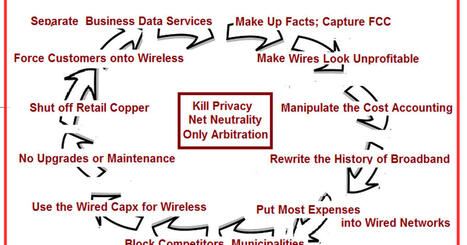
New Networks and our new addition, the IRREGULATORS, are an independent, expert team comprised of senior telecom experts, analysts, forensic auditors, and lawyers who are former senior staffers from the FCC, state advocate and Attorneys General Office lawyers, as well as former telco consultants. FREE DOWNLOAD “The Book of Broken Promises” (pdf)
|