Your new post is loading...

|
Scooped by
The Sainsbury Lab
October 20, 5:22 AM
|
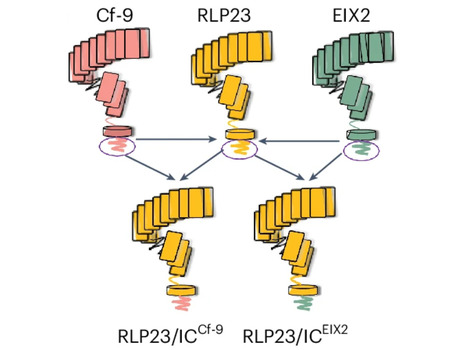
Conventional plant resistance breeding has primarily focused on intracellular immune receptors, while cell-surface pattern recognition receptors (PRRs) have been underexplored because of their comparatively modest contributions to resistance. However, PRRs offer untapped potential for crop improvement. Here we demonstrate that the Arabidopsis receptor-like protein RLP23, which recognizes molecular patterns from three distinct microbial kingdoms, confers broad-spectrum resistance when introduced into the Solanaceae crop tomato. We also identify the C-terminal domain of RLPs as crucial for ensuring compatibility and efficacy during heterologous expression. Targeted engineering of the C-terminal domain significantly enhances RLP23 and its use, enabling transfer of robust resistance against bacterial, fungal and oomycete pathogens to tomato plants without compromising yield. We extend this RLP engineering strategy to rice and poplar, highlighting its broad applicability. These findings establish a versatile framework for PRR-based engineering, opening additional avenues for sustainable crop protection. Engineering an immune receptor improves resistance to bacterial and fungal pathogens in a variety of plants.
|
|
Scooped by
The Sainsbury Lab
October 13, 6:10 AM
|
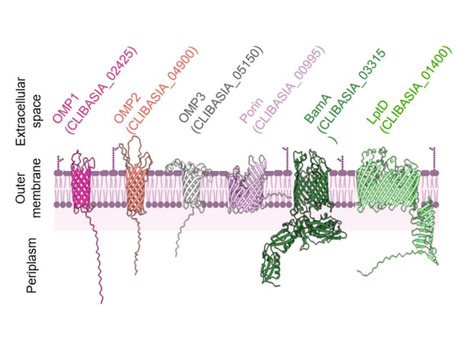
Plants secrete a variety of proteases as a defense response during infection by microbial pathogens. However, the relationship between their catalytic activities and antimicrobial functions remains largely unknown. Particularly, few biologically relevant substrates of these proteases have been identified. Huanglongbing (HLB) has been a major threat to the citrus industry worldwide. The HLB-associated bacterium, Candidatus Liberibacter asiaticus (Las), was previously shown to deploy an inhibitor of papain-like cysteine proteases (PLCPs) to promote disease in citrus. In this study, we identified an outer membrane protein (OMP) of Las, LasOMP1, as a substrate of the citrus PLCP CsRD21a. LasOMP1 is one of the most highly expressed genes in Las. CsRD21a cleaves LasOMP1 and produces cleaved peptide products, which could be detected in vitro and in HLB-diseased citrus plants. We found that CsRD21a targets the N-terminal portion of LasOMP1, potentially at an extracellular loop region. Importantly, transgenic sweet orange overexpressing CsRD21a showed reduced Las titers and delayed disease symptoms, highlighting that engineering this protease is a promising strategy to enhance HLB resistance in citrus. Together, our work reveals a pathogen-derived substrate of plant PLCPs and highlights bacterial OMPs as direct targets of plant defense.
|
|
Scooped by
The Sainsbury Lab
October 13, 6:06 AM
|
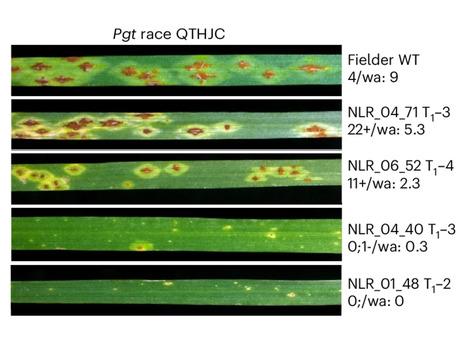
Protecting crops from diseases is vital for the sustainable agricultural systems that are needed for food security. Introducing functional resistance genes to enhance the plant immune system is highly effective for disease resistance, but identifying new immune receptors is resource intensive. We observed that functional immune receptors of the nucleotide-binding domain leucine-rich repeat (NLR) class show a signature of high expression in uninfected plants across both monocot and dicot species. Here, by exploiting this signature combined with high-throughput transformation, we generated a wheat transgenic array of 995 NLRs from diverse grass species to identify new resistance genes for wheat. Confirming this proof of concept, we identified new resistance genes against the stem rust pathogen Puccinia graminis f. sp. tritici and the leaf rust pathogen Puccinia triticina, both major threats to wheat production. This pipeline facilitates the rapid identification of candidate NLRs and provides in planta gene validation of resistance. The accelerated discovery of new NLRs from a large gene pool of diverse and non-domesticated plant species will enhance the development of disease-resistant crops. Rapid discovery of functional resistance genes is enabled by a high-expression signature and high-throughput transformation. This approach identified 31 new resistance genes for wheat and can be applied across crops to support food security.
|
|
Scooped by
The Sainsbury Lab
October 13, 6:02 AM
|
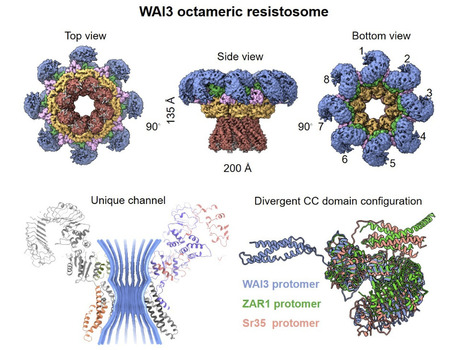
Nucleotide-binding and leucine-rich repeat (LRR) receptors (NLRs) are widespread intracellular immune sensors across kingdoms. In plants, the G10-type coiled-coil (CCG10)-NLRs form a distinct phylogenetic clade that remains poorly characterized. Here, we identified a gain-of-function (GOF) mutant of Wheat Autoimmunity 3 (WAI3), designated WAI3GOF, which encodes a constitutively activated CCG10-NLR protein due to an amino acid substitution. Cryo-EM structural analysis revealed that activated WAI3 assembles into a distinctive octameric resistosome. Arabidopsis RPS2, another CCG10-NLR, also forms an octamer, indicating a conserved structural property across monocot and dicot plants. The WAI3 resistosome mediates a prolonged and sustained increase in cytosolic calcium influx, facilitated by a unique channel architecture arising from its divergent CC domain configuration. Notably, this domain arrangement may be shared by many plant NLRs that lack the conserved EDVID motif in their CC domains. Our findings uncover a previously uncharacterized resistosome structure and provide insights into plant immune receptor plasticity.
|
|
Scooped by
The Sainsbury Lab
August 21, 4:59 AM
|
Arabidopsis has been pivotal in uncovering fundamental principles of plant biology, yet a comprehensive, high-resolution understanding of its cellular identities throughout the entire life cycle remains incomplete. Here we present a single-nucleus and spatial transcriptomic atlas spanning ten developmental stages, encompassing over 400,000 nuclei from all organ systems and tissues—from seeds to developing siliques. Leveraging paired single-nucleus and spatial transcriptomic datasets, we annotate 75% of identified cell clusters, revealing striking molecular diversity in cell types and states across development. Our integrated approach identified conserved transcriptional signatures among recurrent cell types, organ-specific heterogeneity and previously uncharacterized cell-type-specific markers validated spatially. Moreover, we uncover dynamic transcriptional programs governing secondary metabolite production and differential growth patterns, exemplified by detailed spatial profiling of the compact yet complex apical hook structure; this profiling revealed transient cellular states linked to developmental progression and hormonal regulation, highlighting the hidden complexity underlying plant morphogenesis. Functional validation of genes uniquely expressed within specific cell contexts confirmed their essential developmental roles, underscoring the predictive power of our atlas. Collectively, this comprehensive resource provides an invaluable foundation for exploring cellular differentiation, environmental responses and genetic perturbations at high resolution, advancing our understanding of plant biology. This study presents an extensive single-nucleus and spatial transcriptomic atlas of the Arabidopsis life cycle that represents ten distinct developmental time points inclusive of six diverse organs.
|
|
Scooped by
The Sainsbury Lab
August 18, 7:50 AM
|
Asian soybean rust (ASR), caused by the obligate biotrophic fungus Phakopsora pachyrhizi, was first reported in the continental United States of America (USA) in 2004 and over the years has been of concern to soybean production in the United States. The prevailing hypothesis is that P. pachyrhizi spores were introduced into the United States via hurricanes originating from South America, particularly hurricane Ivan. To investigate the genetic diversity and global population structure of P. pachyrhizi, we employed exome-capture based sequencing on 84 field isolates collected from different geographic regions worldwide. We compared the gene-encoding regions from all these field isolates and found that four major mitochondrial haplotypes are prevalent worldwide. Here, we provide genetic evidence supporting multiple incursions that have led to the currently established P. pachyrhizi population of the United States. Phylogenetic analysis of mitochondrial genes further supports this hypothesis. We observed limited genetic diversity in P. pachyrhizi populations across different geographic regions, suggesting a clonal population structure. Additionally, this study is the first to report the F129L mutation in the Cytb gene outside South America, which is associated with strobilurin tolerance. This study provides the first comprehensive characterisation of P. pachyrhizi population structures defined by genetic evidence from populations across major soybean-growing regions.
|
|
Scooped by
The Sainsbury Lab
August 6, 9:25 AM
|
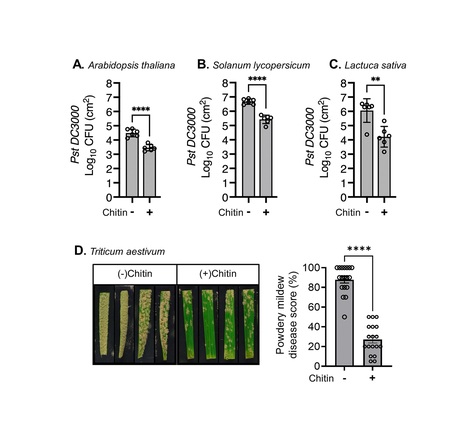
Chitin triggers localised and systemic plant immune responses, making it a promising treatment for sustainable disease resistance. However, the precise molecular mechanisms underlying chitin-induced systemic effects in plants remain unknown. In this study, we investigated the effects of soil amendment with crab chitin flakes (hereafter chitin) on pattern-triggered immunity (PTI) and systemic disease resistance in various plant species. We found that soil amendment with chitin potentiates PTI and disease resistance against the bacterial pathogen Pseudomonas syringae pv. tomato DC3000 in lettuce, tomato and Arabidopsis as well as against the fungal pathogen Blumeria graminis f. sp. tritici (Bgt), which causes powdery mildew in wheat. Using micrografting in Arabidopsis, we demonstrated that this systemic effect is dependent on active chitin perception in the roots. We also showed that induced systemic resistance (ISR) and pattern-recognition receptors (PRRs)/coreceptors, but not systemic acquired resistance (SAR), are involved in the systemic effects triggered by chitin soil amendment. These systemic effects correlated with the transcriptional upregulation of key PTI regulators in distal leaves upon chitin soil amendment. Notably, chitin-triggered systemic immunity was independent of microbes present in soil or chitin flakes. Together, these findings contribute to a better understanding of chitin-triggered systemic immunity, from active chitin perception in roots to the potentiation of PTI in the leaves, ultimately priming plants to mount enhanced defence responses against pathogen attacks. Our study provides valuable insights into the molecular mechanisms of chitin soil amendment and resulting induced immunity and highlights its potential use for sustainable crop protection strategies.
|
|
Scooped by
The Sainsbury Lab
July 31, 4:42 AM
|
In the ongoing plant–pathogen arms race, plants use pattern recognition receptors (PRRs) to recognize pathogen-associated molecular patterns (PAMPs), while in successful pathogens, PAMPs can evolve to evade detection. Engineering PRRs to recognize evading PAMPs could potentially generate broad-spectrum and durable disease resistance. Here we reverse-engineered two natural variants of the PRR FLAGELLIN SENSING 2 (FLS2), VrFLS2XL and GmFLS2b, with extended recognition specificities towards evading flg22 variants. We identified minimal gain-of-function residues enabling blind FLS2s to recognize otherwise evading flg22 variants. We uncovered two strategies: (1) optimizing FLS2–flg22 interaction around flg22’s key evasion sites and (2) strengthening direct FLS2–BAK1 interaction to overcome weak agonistic and antagonistic flg22s, respectively. In addition, we leveraged polymorphisms that enhance recognition through unknown mechanisms to engineer a superior recognition capability. These findings offer basic design principles to engineer PRRs with broader recognition spectra, paving the way for PRR engineering to generate precisely gene-edited disease-resistant crops. By dissecting natural variants, Zhang et al. uncover design principles for engineering the FLS2 immune receptor with broad recognition spectra to detect evasive bacterial pathogens, offering a promising strategy to improve crop disease resistance.
|
|
Scooped by
The Sainsbury Lab
July 21, 8:40 AM
|
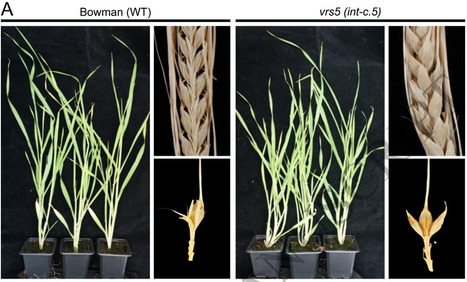
Variation in shoot architecture, or tillering, is an important adaptive trait targeted during the domestication of crops. A well-known regulatory factor in shoot architecture is TEOSINTE BRANCHED 1 (TB1). TB1 and its orthologs have a conserved function in integrating environmental signals to regulate axillary branching or tillering in cereals. The barley (Hordeum vulgare) ortholog of TB1, VULGARE ROW-TYPE SIX 5 (VRS5), regulates tillering and is involved in regulating row-type by inhibiting lateral spikelet development. These discoveries predominantly come from genetic studies; however, how VRS5 regulates these processes on a molecular level remains largely unknown. By combining transcriptome analysis between the vrs5 mutant and the wild type at different developmental stages and DAP-sequencing to locate the genome-wide DNA binding sites of VRS5, we identified bona fide targets of VRS5. We found that VRS5 targets abscisic acid-related genes, potentially to inhibit tillering in a conserved way. Later in inflorescence development, VRS5 also targets row-type gene VRS1 and several known floral development genes, such as MIKCc-type MADS-box genes. This study identifies several genes for mutational analysis, representing a selection of bona fide targets that will contribute to a deeper understanding of the VRS5 network and its role in shaping barley development.
|
|
Scooped by
The Sainsbury Lab
July 16, 11:20 AM
|
Leucine-rich repeat (LRR) receptor kinases (RKs) and receptor proteins (RPs) are important classes of plant pattern recognition receptors (PRRs) activating pattern-triggered immunity. While both classical and AI-based structural approaches have recently provided crucial insights into ligand-LRR-RK binding mechanisms, our understanding of ligand perception by LRR-RPs remains limited. In contrast to LRR-RKs, many LRR-RPs typically embed one or more loopout regions in their extracellular domains that are crucial for functionality. Here, we employed an AI-based approach to reveal a novel ligand-binding mechanism shared by the Arabidopsis LRR-RPs RLP23 and RLP42 – the PRRs for the short peptide ligands nlp20 and pg13, derived from NECROSIS- AND ETHYLENE-INDUCING PEPTIDE 1-like proteins (NLPs) and fungal endopolygalacturonases (PGs), respectively. This mechanism relies on a β-strand interaction with the N-terminal part of the island domain (ID) loopout, which adopts an antiparallel β-sheet conformation. Additionally, we investigated the larger and more complex binding interface of RLP32 – the PRR for proteobacterial TRANSLATION INITIATION FACTOR 1 (IF1), a folded protein ligand that requires its tertiary structure for recognition. Finally, we describe a mechanistic role of the ID for co-receptor recruitment conserved across LRR-RPs. Together, our results shed light on the ligand-binding mechanisms and receptor complex formation of this important class of PRRs. This opens avenues for a molecular understanding of the plant-pathogen co-evolution, as well as the engineering of plant immune receptors for crop disease resistance.
|
|
Scooped by
The Sainsbury Lab
July 16, 11:15 AM
|
Effector-triggered immunity (ETI) is a central component of host defense, but whether all cell types execute ETI similarly remains unknown. We combined chemically imposed immune activation with single-cell transcriptomics to profile ETI responses across all leaf cell types in Arabidopsis. Despite uniform ETI perception, we find striking divergence between transcriptional outputs: a core set of defense genes is broadly induced, while distinct cell types activate specialized immune modules. We infer that downstream immune execution is shaped not only by immune receptor activation, but also by cell identity and its associated transcriptional regulatory context, including local transcription factor availability and chromatin accessibility. We further demonstrate that transcriptional regulators preferentially induced in epidermal cells are required to restrict invasion by non-adapted pathogens. Their absence permits pathogen entry into deeper tissues despite intact recognition, revealing a spatial division of immune functions. Our findings uncover a layered immune architecture in plants, challenges the assumption of uniform immune execution, and provides a framework for exploring cell-type-specific resistance logic in multicellular hosts.
|
|
Scooped by
The Sainsbury Lab
July 16, 11:06 AM
|
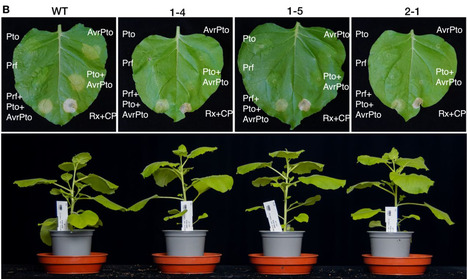
Nucleotide-binding domain and leucine-rich repeat immune receptors (NLRs) can function in networks of sensors and helpers to induce hypersensitive cell death and immunity against pathogens. The tomato sensor NLR Prf guards the Pto kinase from AvrPto and AvrPtoB effector perturbation and activates the downstream helpers NRC2 and NRC3. Prf is conserved across the Solanaceae and its ortholog in the model species Nicotiana benthamiana is also required for detection of AvrPto/AvrPtoB function on Pto. A recent study reported that cell death induction after transient expression of an autoactive mutant of tomato NRC3 is abolished upon RNAi silencing of Prf in N. benthamiana. Here we generated loss-of-function prf mutants in N. benthamiana and demonstrate that autoactive mutants of eight canonical tomato NRCs (NRC0, NRC1, NRC2, NRC3, NRC4a, NRC4b, NRC6, and NRC7) still induce hypersensitive cell death when expressed transiently in the prf mutant background. Autoactive tomato NRCs also triggered cell death when expressed in lettuce (Lactuca sativa), an Asteraceae plant that does not have a Prf ortholog. These results confirm a unidirectional dependency of sensors and helpers in the NRC network and underscore the value of the N. benthamiana and lettuce model systems for studying functional relationships between paired and networked NLRs.
|
|
Scooped by
The Sainsbury Lab
July 16, 10:59 AM
|
Advances in single-cell and spatial omics technologies have revolutionised biology by revealing the diverse molecular states of individual cells and their spatial organization within tissues. The field of plant biology has widely adopted single-cell transcriptome and chromatin accessibility profiling and spatial transcriptomics, which extend traditional cell biology and genomics analyses and provide unique opportunities to reveal molecular and cellular dynamics of tissues. Using these technologies, comprehensive cell atlases have been generated in several model plant species, providing valuable platforms for discovery and tool development. Other emerging technologies related to single-cell and spatial omics, such as multiomics, lineage tracing, molecular recording, and high-content genetic and chemical perturbation phenotyping, offer immense potential for deepening our understanding of plant biology yet remain underutilised due to unique technical challenges and resource availability. Overcoming plant-specific barriers, such as cell wall complexity and limited antibody resources, alongside community-driven efforts in developing more complete reference atlases and computational tools, will accelerate progress. The synergy between technological innovation and targeted biological questions is poised to drive significant discoveries, advancing plant science. This review highlights the current applications of single-cell and spatial omics technologies in plant research and introduces emerging approaches with the potential to transform the field.
|
|
|
Scooped by
The Sainsbury Lab
October 13, 8:22 AM
|
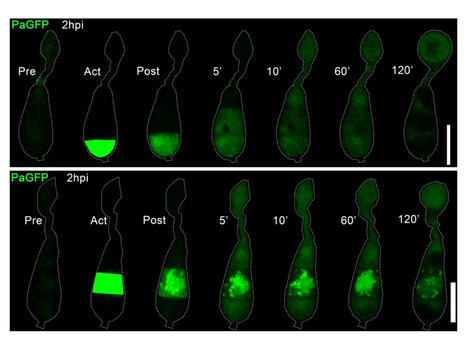
The blast fungus Magnaporthe oryzae infects plants using a specialised infection structure called an appressorium that generates physical force to break the rice leaf cuticle. Appressorium development follows a cell cycle-controlled morphogenetic program, requiring autophagy-associated cell death of the fungal spore from which the infection cell develops. How proliferative growth of the fungus is regulated at the same time as programmed cell death, however, is unknown. In this study, we provide evidence that each cell of the conidium undergoes a separate developmental program, which is necessary for plant infection. Using quantitative live-cell imaging, we monitored trafficking of ten organelle types during appressorium morphogenesis in a wild-type M. oryzae strain and isogenic ∆atg8 autophagic mutant. High-resolution microscopy using a photoactivatable green fluorescent protein revealed that organelle trafficking occurs from a single conidium cell into the appressorium, while the remaining two cells undergo autophagy. Organelle inheritance operates independently of cell cycle checkpoints but is always associated with spore germination. We furthermore defined the temporal sequence of organelle movement and de novo organelle biogenesis in the incipient appressorium using photoconvertible fluorescent localisation microscopy. Taken together, our study reveals how synchronous spatiotemporal control of autophagy and organelle trafficking is necessary for rice blast infection.
|
|
Scooped by
The Sainsbury Lab
October 13, 6:08 AM
|
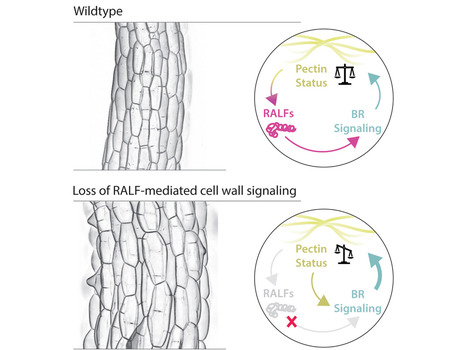
Plant cells survey and modulate their cell walls to control their shape and anisotropic growth. Signaling mediated by the plant steroid hormones brassinosteroids (BR) plays a central role in coordinating cell wall status and cell growth, and alterations in the cell wall-BR feedback loop leads to life-threatening defects in tissue and cellular integrity. How the status of the cell wall is relayed to BR signaling remains largely unclear. Increasing evidence shows that RAPID ALKALANIZATION FACTORs (RALFs), a class of secreted peptides, play structural and signaling roles at the cell surface. Here, we show that loss of RALF signaling mediated by the plasma membrane-localized RALF receptor complex FERONIA (FER)-LORELEI-LIKE GPI-anchor protein 1 (LLG1) leads to defects in cell morphology, organization, and composition of the cell wall-including pectin methylation status-and to an increase in BR signaling. We observed that increase in BR signaling mitigates the cellular defects associated with the loss of FER-mediated RALF signaling. We show that perception of RALF23 promotes the formation and signaling activity of the main BR receptor complex formed by BRASSINOSTEROID INSENSITIVE 1 (BRI1) and BRI1-ASSOCIATED KINASE 1 (BAK1) and that its bioactivity relies on pectin status. Our observations suggest a model in which RALF peptides operate at the nexus between cell wall status and BR signaling, capable of inducing changes in the cell wall as well as functioning as a cell-wall-informed signaling cues initiating a feedback loop that solicits BR signaling and coordinates cell morphogenesis.
|
|
Scooped by
The Sainsbury Lab
October 13, 6:04 AM
|
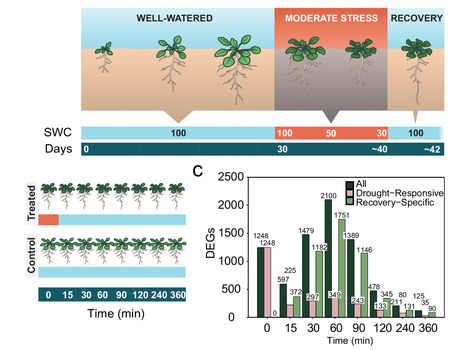
All organisms experience stress as an inevitable part of life, from single-celled microorganisms to complex multicellular beings. The ability to recover from stress is a fundamental trait that determines the overall resilience of an organism, yet stress recovery is understudied. To investigate how plants recover from drought, we examine a fine-scale time series of RNA sequencing starting 15 min after rehydration following moderate drought. We reveal that drought recovery is a rapid process involving the activation of thousands of recovery-specific genes. To capture these rapid recovery responses in different Arabidopsis thaliana (A. thaliana) leaf cell types, we perform a single-nucleus transcriptome analysis at the onset of drought recovery, identifying a cell type-specific transcriptional state developing independently across cell types. To further validate the cell-type specific transcriptional changes observed during drought recovery, we employ spatial transcriptomics using multiplexed error-robust fluorescence in situ hybridization (MERFISH), revealing anatomical localization of recovery-induced gene expression programs across Arabidopsis leaf tissues. Furthermore, we reveal a recovery-induced activation of the immune system that occurs autonomously, and which enhances pathogen resistance in vivo in A. thaliana, wild tomato (Solanum pennellii) and domesticated tomato (Solanum lycopersicum cv. M82). Since rehydration promotes microbial proliferation and thereby increases the risk of infection, the activation of drought recovery-induced immunity may be crucial for plant survival in natural environments. These findings indicate that drought recovery coincides with a preventive defense response, unraveling the complex regulatory mechanisms that facilitate stress recovery in different plant cell types. Post-drought rehydration triggers a preventive immune response in plants, revealing targets to enhance crop resilience by linking drought stress recovery with improved pathogen resistance.
|
|
Scooped by
The Sainsbury Lab
August 27, 6:11 AM
|
Extracellular alkalinization has long been recognized as a hallmark of plant cell-surface receptor activation, including during pattern-triggered immunity (PTI); yet the mechanisms driving elicitor-induced alkalinization and its role in immune signaling remain unclear. Here, we demonstrate that inhibition of autoinhibited H+-ATPases (AHAs) is required for elicitor-induced extracellular alkalinization. This alkalinization is essential for immune signaling mediated by diverse plasma membrane-localized receptor kinases (RKs) through modulation of ligand-receptor interactions. Notably, RKs transduce elicitor-triggered signaling via BOTRYTIS-INDUCED KINASE 1 (BIK1), which inhibits AHA activity by disrupting AHA-GENERAL REGULATORY FACTOR (GRF) interactions through a conserved phosphorylation event. Interestingly, this pathway is crucial for cell wall damage (CWD) responses involving the RK MALE DISCOVERER 1-INTERACTING RECEPTOR LIKE KINASE 2 (MIK2) and its ligand, SERINE RICH ENDOGENOUS PEPTIDE 18 (SCOOP18). Our findings reveal a conserved phospho-regulatory pathway that governs extracellular alkalinization to coordinate plant immune signaling, offering new insights into plant stress resilience.
|
|
Scooped by
The Sainsbury Lab
August 19, 4:59 AM
|
Plant immunity emerges as cells, normally dedicated to non-immune functions, transition their states through diverse mechanisms to engage in defense roles. This Forum explores the concept of plant immune cell states, their biological significance, and emerging approaches to study them, highlighting the complex cellular basis of plant-microbe interactions.
|
|
Scooped by
The Sainsbury Lab
August 18, 6:10 AM
|
Protein evolution is influenced by historical contingencies and functional constraints, but their combined impact on rapidly diversifying pathogen virulence effectors remains poorly understood. Here, we combined ancestral state reconstructions and functional assays to recapitulate the evolution of the MAX-fold effector protein APikL2 of the plant pathogenic blast fungus Magnaporthe (syn. Pyricularia) oryzae, focusing on the ancestral and functionally critical amino acid residue D66 (Asp, Codon: GAT). “Rewinding the tape” experiments based on ancestral sequence resurrection revealed that, out of the seven potential amino acid substitutions derived from single nucleotide polymorphisms, only the naturally occurring D66N (Asp to Asn, GAT to AAT) expanded the binding spectrum to host plant proteins of the heavy metal associated (HMA) family. In contrast, three of the nonsynonymous substitutions were deleterious resulting in loss of binding to HMA proteins. Additionally, we identified three cases of homoplasy in the APikL effector family, involving HMA-binding interfaces, indicating recurrent convergent evolution. Our findings suggest an experimental framework for predicting evolutionary outcomes of pathogen effector—host target interactions with implications for plant disease resistance breeding.
|
|
Scooped by
The Sainsbury Lab
July 31, 5:37 AM
|
|
|
Scooped by
The Sainsbury Lab
July 22, 12:24 PM
|
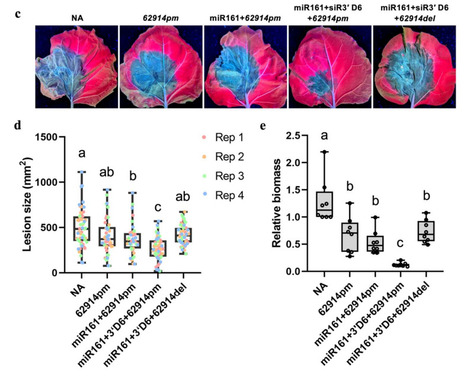
Small RNA-mediated gene silencing contributes to plant immunity. The secondary small interfering RNA (siRNA) pathway promotes defense by silencing target genes in invading fungal and oomycete pathogens. Many secondary siRNAs derive from transcripts potentially encoding pentatricopeptide repeat (PPR) proteins. Here, we report that siRNA production is an ancient function of an evolutionarily conserved clade of PPR genes that undergo extensive within-species diversification. In Arabidopsis thaliana, siRNA-source PPRs are physically clustered in one locus on Chromosome 1. These sequences are diversified through gene duplication followed by sequence diversification as well as accumulation of high-impact variations including pseudogenization. This diversity leads to the accumulation of a diverse PPR-siRNA pool, consistent with an engagement in a co-evolutionary arms race with the pathogens. This study defines siRNA-producing PPRs as a family of defense genes and highlights the potential of PPR-siRNA-based engineering for enhancing broad-spectrum disease resistance.
|
|
Scooped by
The Sainsbury Lab
July 18, 3:55 AM
|
Nucleotide binding and leucine-rich repeat (NLR) proteins are intracellular immune receptors that occur across all kingdoms of life but are particularly highly diversified in plants (Barragan & Weigel, 2021). In plants, NLRs that carry a coiled-coil (CC) domain at their N termini are the most phylogenetically widespread class. Following pathogen recognition, CC-NLR proteins oligomerize into pentameric or hexameric pore-like complexes (Wang et al., 2019; Förderer et al., 2022; Zhao et al., 2022; Liu et al., 2024; Madhuprakash et al., 2024). These complexes, known as resistosomes, are a defining feature of NLRs that execute the immune response; some of them are known to translocate to cellular membranes and trigger immune responses such as calcium influx and hypersensitive cell death (Duggan et al., 2021; Contreras et al., 2022; Ibrahim et al., 2024). The prevailing model is that the funnel-shaped structure of CC-NLR resistosomes inserts into membranes and is required for executing the cell death and immune response (Wang et al., 2019; Adachi et al., 2019b; Förderer & Kourelis, 2023). This funnel-shaped structure is formed by the N-terminal α1 helix, which is a structurally dynamic region that is difficult to resolve using cryo-electron microscopy (cryo-EM) (Förderer et al., 2022; Zhao et al., 2022; Liu et al., 2024; Madhuprakash et al., 2024).
|
|
Scooped by
The Sainsbury Lab
July 16, 11:19 AM
|
Pathogens counteract central nodes of NLR immune receptor networks to suppress immunity. However, the mechanisms by which pathogens hijack helper NLR pathways are poorly understood. Here, we show that an effector from the potato late blight pathogen Phytophthora infestans bridges the host protein NbTOL9a, a putative member of the host ESCRT pathway, to a helper NLR to suppress immunity. In this work, we solved the crystal structure of the RXLR-LWY effector AVRcap1b in complex with the ENTH domain of NbTOL9a. The structure revealed that unlike other RXLR-LWY effectors, AVRcap1b has a novel L-shaped fold that defines a new structural family of effectors in the Phytophthora genus. Moreover, we defined the AVRcap1b/NbTOL9a binding interface and designed effector mutants that don’t bind NbTOL9a, impairing immune suppression. This indicates that ENTH binding is required for full virulence activity of this effector. Lastly, we show that AVRcap1b associates specifically with activated NbNRC2 independently of NbTOL9a binding. This suggests that the effector functions as a bridge that interconnects NbNRC2 with the NbTOL9a pathway. These results illustrate an unprecedented pathogen mechanism to hijack helper NLR pathways and suppress immunity.
|
|
Scooped by
The Sainsbury Lab
July 16, 11:13 AM
|
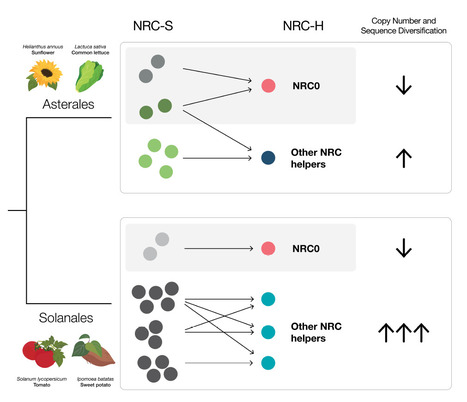
Nucleotide-binding domain and leucine-rich repeat immune receptors (NLRs) are known for their rapid evolution, even at the intraspecific level, yet the rates of evolution differ significantly across various NLR classes. Within the NRC (NLR Required for Cell Death) network, NLRs operate in complex sensor-helper configurations to confer immunity against a diverse array of pathogens, particularly in Asterids. While helper NLRs are typically conserved and evolve slowly, sensor NLRs tend to evolve more rapidly. However, the functional connections between slow and fast-evolving NLRs remain poorly understood, notably in important crop species. We conducted a comparative analysis of NLRs across 40 Solanales and 29 Asterales genomes to explore NRC network expansion and diversification within the less-studied Asterales order. Our findings reveal that the NRC network has expanded less in Asterales compared to Solanales. We functionally validated a minimal Asterales NRC network with 2 helpers and 9 sensors in common lettuce (Lactuca sativa). Through selection and diversification analysis and structural modeling of NRC helper and sensor subclades in the Lactuca genus, we found varying evolutionary diversification rates between NRC helpers and sensors. We found a correlation between sensor diversification rates and helper dependency, with sensors reliant on a phylogenetically conserved helpers experiencing limited diversification pressure. Our results highlight the lineage- and function-specific evolution of the NRC network, offering insights into the evolutionary pressures shaping plant immune receptor networks.
|
|
Scooped by
The Sainsbury Lab
July 16, 11:04 AM
|
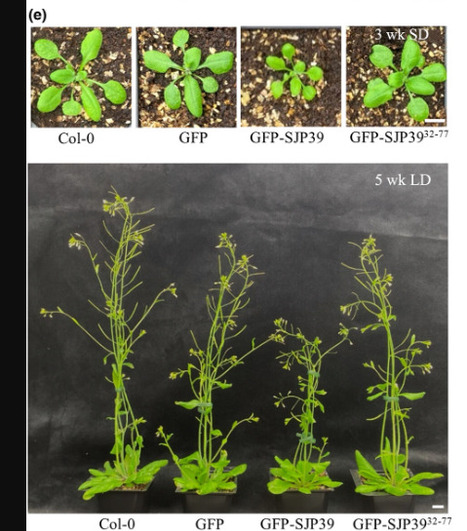
- Phytoplasmas are specialized phloem-limited bacteria that cause diseases on various crops, resulting in significant agricultural losses. This research focuses on the jujube witches' broom (JWB) phytoplasma and investigates the host-manipulating activity of the effector SJP39.
- We found that SJP39 directly interacts with the plant transcription factor bHLH87 in the nuclei. SJP39 stabilizes the bHLH87 homologs in Arabidopsis thaliana and jujube, leading to growth defects in the plants.
- Transcriptomic analysis indicates that SJP39 affects the gibberellin (GA) pathway in jujube. We further demonstrate that ZjbHLH87 regulates GA signaling as a negative regulator, and SJP39 enhances this regulation.
- The research offers important insights into the pathogenesis of JWB disease and identified SJP39 as a virulence factor that can contribute to the growth defects caused by JWB phytoplasma infection. These findings open new opportunities to manage JWB and other phytoplasma diseases.
|