Diwali 2026, Festival of Lights 2026, Diwali tourism India, Deepavali celebrations worldwide, Indian festival tourism, Diwali travel demand, Indian outbound tourism, cultural tourism opportunities
Agoda's Asia Travel Pulse survey found Indian travellers showing stronger-than-average interest in offbeat destinations, adventure, spiritual journeys and longer stays
Can you be in love with an ad from brands you HATE as a consumer? As a former Marketing Head, I absolutely, gloriously am.
Apple x Raw Mango Pvt Ltd's Diwali film has been all over my feed since yesterday. It's the fruit chaat of ads: a delicious well-designed medley of fruity brands, the perfect masala, fun, sharp dancing, a pinch of 90s music nostalgia & a sprig of Juhi to finish. 🌼
What's not to love? (Or hate. I actually do hate fruit chaat 😅)
It's a very smart decision to bring together 2 design led power brands.
As a user, I just don't enjoy either brand. 5-6 iPods taught me life inside a walled orchard (iTunes was my Hotel California 🎸). All my beautiful metal albums & LimeWire scrapes are lost to history because they just won't transfer.
And Raw Mango? Saree ka roop suhana lagta hai, but ₹60K for a saree that costs maybe ₹15K elsewhere was never priced for the aam aadmi. 🥭💸
Yet the marketer in me has it on loop, because both brands are unabashedly proud of their design identity. The song is a crazy earworm that won't leave my head, & with those dance moves, the ad is almost Gap-esque (think KATSEYE x Milkshake) in effervescence & recall.
They've laid down the playbook every brand in their category thirsts to emulate. Apple's design & Raw Mango's photoshoots are just the chaat chef's kiss.🤌
The idea is to show off Diwali & the iPhone's camera. Shot on iPhone 18 Pro in low light at Tijara Fort, it speaks to creatives & creators (& both are different) who love luxury & great cameras, & who absolutely understand the impact of styling & bold visual language.
Edit: I'm seeing a lot of commentary around it not resonating - well it's a fashion film meant for the elite & to make Apple feel luxury. They are not wishing happy Diwali to us general folks who buy it on EMIs. Just look at similar films from Sabyasachi, Anita Dongre, Royce Chocolates this year.
Anyways, I must compliment the choice of dancers, their architectural moves & yes, the clothes. But the masterstroke is 1 song that cuts through North, South & every part of India. *Slow claps* 👏
So this Diwali, looks like I'll finally attempt to eat the apple & the raw mango together.
What a burst of nostalgic flavour. 🎆 | 20 comments on LinkedIn
The Diwali Retail Campaign at Frankfurt Airport combines cultural awareness with offers, services and shopping experiences for travelers to and from India.
The Indian gifting market is projected to reach USD 92.32 billion by 2030, creating exciting opportunities for brands to connect with affluent consumers through distinctive products, curated experiences, and bespoke offerings. Swipe right to explore. #LuxuryGifting #IndianLuxuryMarket #LuxuryConsumers #LuxeAnalytics
India's hotel ecosystem is much bigger than just the well-known hotel names.
From The Indian Hotels Company Limited (IHCL) and ITC Hotels Limited to Oberoi Hotels & Resorts, Lemon Tree Hotels, Sarovar Hotels, Royal Orchid Hotels, The Fern Hotels & Resorts, Pride Hotels Group and other major Indian hospitality companies, each group has built a different portfolio of brands and properties.
In this infographic, we mapped 20 major Indian hotel groups and their associated hotel brands.
It also highlights an important distinction:
Indian hotel group ≠ hotel brand owner.
Companies such as Chalet Hotels Limited, Juniper Hotels Limited, Brigade Hospitality and Ventive Hospitality Ltd operate properties under international brands such as Marriott Hotels, Hyatt, IHG Hotels & Resorts and Accor.
Understanding this structure is important when looking at India's hotel distribution and hospitality technology ecosystem.
Which Indian hotel group would you add to this list?
For the first time, India is building watch brands worth taking seriously.
And having spent a good part of my career in watch markets, I'm keeping a close eye on this with real interest.
A new wave of homegrown Indian luxury brands in this space is coming; a few names like Bangalore Watch Company™ and Jaipur Watch Company are doing some good work.
They've realised the immense potential of the millenials/Gen Z clients who are looking for a brand with meaning and which is not mass-produced, both in India but also abroad.
Plus, they are also leveraging a growing sense of pride from customers in supporting homegrown products in the luxury space, as the heritage inspiration and cultural references are well received by watch enthusiasts.
But there are still a few limitations in the current business models that need to be fixed:
>> Design that's refined rather than just inspired: A strong idea means little if the execution is off. A bulky case or clumsy proportions are the first thing a connoisseur notices, and the first reason they walk away.
>> The price has to match the build: Enthusiasts spot the gap in quality in just a few seconds, in the strap, choice of movement, the finishing. Charge like the big names, but also build like them.
>> The story has to be real: Young, sophisticated buyers can smell marketing from across the room and that’s why the storytelling needs to have substance to convince them.
>> The experience has to deliver: Ability to fulfil orders, after-sales service, warranties all of that should work without any flaws as one happy customer talking is worth more than any ad.
I learned most of these while building TAG Heuer. We got the product, the story and the experience to line up until the brand felt inevitable.
Diwali just became global luxury’s newest obsession 🪔
If you want to know what happens next, look at Lunar New Year.
This October, Bvlgari launched its 1st-ever global Diwali campaign. In Jaipur, artist Doyel Joshi worked with kumhar potters and local craftswomen to create 4,500 terracotta diyas, each shaped like the scales of Bvlgari’s iconic Serpenti.
It wasn’t alone. Cartier celebrated at its Fifth Avenue mansion. Valentino and CHANEL hosted Diwali parties. Burberry and Jimmy Choo joined the festivities too.
Follow the money and it makes sense.
India’s luxury market is expected to more than triple by 2030 📈
But we’ve seen this film before. It’s called Lunar New Year🧧
As Chinese consumers became luxury’s growth engine, the festival became a fixture on the global luxury calendar. Every year, a new wave of zodiac capsules. A rat on a handbag. A snake on a scarf.
It worked, for a while. Then it didn’t.
By the Year of the Snake, Chinese consumers were calling the limited editions redundant and hollow. Meanwhile, domestic “New Chinese Style” labels kept breaking sales records.
Global brands had turned the festival into a theme. Local brands turned it into an identity. Which is why the most interesting Diwali moment this month may not be Bvlgari’s.
10 days after Jaipur, SABYASACHI hosted Diwali at New York’s Metropolitan Museum of Art. Not a capsule. Not a campaign. An Indian brand taking its own festival to the world, untranslated.
When global luxury discovers your festival, it’s a compliment. It’s also a starting gun💡
Diwali is in year one of the Lunar New Year curve. In the short run, it will go to whoever spends the most. In the long run, it will belong to whoever makes it part of who they are.
That’s the difference between participating in culture and shaping it.
So, before your next cultural campaign, it’s worth asking:
1️⃣ Is the festival a theme for us, or part of who we are? If you swapped your logo for a competitor’s, would anyone notice?
2️⃣ Will it outlive the season? Work built with local hands compounds. Work decorated with local motifs fades.
3️⃣ Are we borrowing from the culture, or adding to it? The brands that endure give a festival something new, not just take its symbols.
A diya on the packaging lasts one season.
A place in culture lasts generations✨
I write about brands, advertising and the culture that shapes them.
Follow for more stories like this 🔔
#Diwali #LuxuryMarketing #BrandBuilding #Culture #India| 16 commentaires sur LinkedIn
India's online travel companies are going after the hotels, buses, and cabs that still sell offline.
MakeMyTrip, India's largest online travel agency, reported $2.7 billion in gross bookings for its fiscal second quarter, which ended in September. That was up 21% from a year earlier in constant currency.
Air travel was the weak spot. Domestic air departures in India fell 7% as fares rose roughly 25% to 30%.
Other businesses grew faster. Bus volumes rose nearly 25%. Intercity cabs grew more than 40%, from a small base. Hotels and packages now make up about 40% of the business. Non-air businesses were 63.2% of gross bookings, up from 61.5% a year earlier.
"Much of India's travel supply is fragmented and a meaningful part of it still operates offline," group CEO Rajesh Magow said.
The company's artificial intelligence assistant, Myra, handles more than 90,000 conversations a day. Customers who use it book at about 1.7 times the rate of those who don't.
In the post-pandemic world, sustainability is no longer a differentiator. It is becoming a baseline expectation among affluent Indians.
Across luxury sectors, the shift is clear: 🌱 89% of Gen Z say sustainability is essential to the future of luxury fashion. 🚗 66% rise in luxury EV sales signals growing adoption of electric mobility among India’s ultra-rich. ✈️ 88% of Indian travellers prioritise sustainability, placing India 3rd in Asia on this measure. 🏡 65% of Indian homebuyers under 40 are willing to pay a premium for eco-friendly homes.
The message for luxury brands is clear: Sustainability is moving from “nice to have” to “expected.”
Swipe right to discover sustainability trends, consumer insights and growth opportunities across automobiles, fashion, hospitality and real estate.
Why are 38.4% of rural overnight trips in India for medical care? The latest Domestic Tourism Expenditure Survey reveals a striking difference between why rural and urban Indians travel.
Health and medical trips were the second-largest category for rural overnight travel, while holidaying, leisure and recreation was the second-largest purpose in urban India.
The survey also found that medical trips had the highest average expenditure, at around ₹29,454 for rural households and ₹41,649 for urban households.
Here is what India’s latest tourism data tells us about rural healthcare, medical travel and the hidden cost of seeking treatment.
rural india, rural healthcare, rural india healthcare, healthcare in rural india, medical travel india, medical care india, medical tourism india, india tourism, india tourism data, domestic tourism india, domestic tourism expenditure survey, domestic tourism expenditure survey 2025-26, DTES 2025-26, NSO tourism survey, MoSPI, India tourism 2026, overnight trips india, overnight trips rural india, 38.4 percent, 38.4% rural india, health and medical trips, rural healthcare access, medical treatment india, cost of medical treatment, CNBC TV18, CNBCTV18, CNBCTV18 Digital
Indian travellers are increasingly turning to Eastern destinations as airspace closures, soaring airfares and currency depreciation continue to weigh on travel
MUMBAI, 3 November 2026: New Year travel is evolving beyond the traditional midnight countdown, with Indian travellers increasingly looking to combine end-of-year celebrations with distinctive destination experiences. From spectacular fireworks and summer adventures in Australia and New Zealand to winter festivities in Europe, cultural celebrations across Asia and immersive cruise journeys, Indian travellers are exploring […]
Indian travellers can now enjoy a 10% discount at Dubai Duty Free by using India's UPI for payments. This initiative, introduced by NPCI International, simplifies transactions for shoppers while eliminating the need for cash. With this exclusive offer, Indian visitors can experience a more rewarding shopping journey in Dubai, enhancing the convenience of their travel experience.
Bangkok leads in Indian passenger volume, while Incheon Terminal 2 records the fastest growth among ten destinations identified in the Air4casts analysis
Are we really paying India’s hospitality workforce enough to build a long-term career?
Having worked in hospitality, this is something I’ve often wondered about and it continues to concern me for the young professionals who genuinely are excited about joining the industry.
Many of my classmates have shifted from Hospitality to a completely different field and the common discussion has always been about the salary being offered even after 5-7 years of experience.
According to the Tourism & Hospitality Skill Council’s workforce study, highlighted again in July 2026:
* Entry-level hospitality workers earn a median of just ₹13,000 per month. * Employees in organised businesses earn around ₹15,000. * Food service workers earn a median of approximately ₹10,000. * 61% of surveyed employees work beyond 8 hours a day, often doing 10–11-hour shifts. * Only 41% of employees working overtime reported receiving additional pay. (India Today)
Yes, the industry is growing. Yes, salaries are projected to increase by 9.2% in FY 2026–27. But are these improvements reaching the entry-level workforce proportionately?
We expect exceptional service, long hours, flexibility and dedication from every working in this people focused sector.
But we also need to offer compensation that makes hospitality a sustainable career.
We cannot keep talking about talent shortages and employee retention without addressing what we pay our talent.
Hospitality takes care of millions of guests. It’s time we took better care of the people behind those experiences.
What are your thoughts and feelings about the pay scale in the Hospitality Industry?
Diwali is one of the biggest opportunities for brands to win consumer attention.
But getting noticed and getting chosen are two different things.
CAIT estimates India’s festive trade between Navratri and Diwali could cross ₹7 lakh crore in 2026, registering 15–18% growth YoY
That scale makes the festive season an important opportunity for businesses.
But for consumers, every purchase still comes down to choices: what is worth buying, where to spend, and which brand deserves their money.
That’s where District Stores’ Diwali print campaign caught my attention.
It got me thinking about a larger question for marketers: in a season filled with festive offers and familiar advertising, what makes people actually stop and pay attention?
Can we talk about the ad direction here & 203 candid lines of what the creator enjoys about it
Because festive marketing isn’t simply about competing on discounts.
It’s about understanding consumer priorities and communicating in a way that makes a brand worth considering.
After all, attention gets you notice, relevancee gets you chosen. | 40 comments on LinkedIn
The Indian gifting market is projected to reach USD 92.32 billion by 2030, creating exciting opportunities for brands to connect with affluent consumers through distinctive products, curated experiences, and bespoke offerings. Swipe right to explore. #LuxuryGifting #IndianLuxuryMarket #LuxuryConsumers #LuxeAnalytics
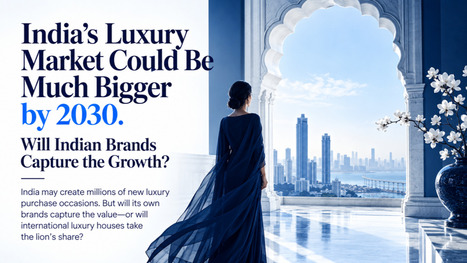
India may create millions of new luxury purchase occasions. But will its own brands capture the value or will international luxury houses take the lion’s share? India could become one of the most consequential growth markets for luxury over the next decade.
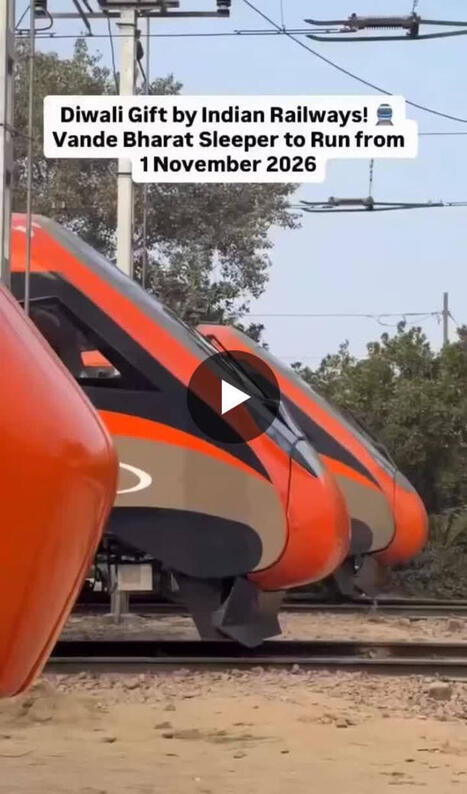
Mumbai–Bengaluru Vande Bharat Sleeper train likely to begin operations on 1 November 2026, potentially bringing a major connectivity boost as a Diwali gift for rail passengers.
A new chapter in overnight rail travel between two of India's biggest economic hubs!
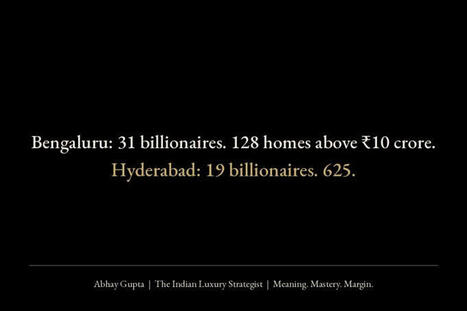
BENGALURU HAS 31 BILLIONAIRES. HYDERABAD HAS 19. GUESS WHICH CITY BUYS MORE LUXURY.
Name India’s third luxury city after Mumbai and Delhi, and almost everyone in the trade says Bengaluru without a pause.
~ On wealth, they are right. Bengaluru holds 31 billionaires to Hyderabad’s 19, and it captured roughly forty-six per cent of India’s startup funding in 2025.
~ Now the number that does not fit. In FY 2026, Bengaluru recorded 128 home sales above ₹10 crore. Hyderabad recorded 625. Both figures come from the same source, on the same method, over the same period.
~ Bengaluru has 1.6 times the billionaires and one-fifth of the luxury homes.
Report II of The Future Geography of Luxury in India, from LC Intelligence, set out to explain that gap. The answer turned out to have less to do with money and more to do with geography.
Before you read it, tell me one thing. Why do you think Bengaluru’s wealth is not showing up as luxury? I will answer the sharpest replies myself in the comments.
Airlines cut 5% of their festive-season flights but only 1.2% of seats. That gap, not the 68% headline, is the number anyone booking a group trip this Diwali should be watching.
Everyone is sharing the same number this week. Delhi to Hyderabad fares up 68% for travel between September 1 and November 10. Mumbai to Kolkata up 51%. Delhi to Goa up 39%. Mumbai to Bengaluru up 37%.
That is a route story, not a market story. Yatra puts the overall domestic rise at 30 to 40%. Still steep, but 68% is the worst case, not the average.
The more important data sits underneath. OAG shows airlines have scheduled 5% fewer domestic flights for October to December, while seats are down only 1.2%. They are flying bigger aircraft, less often.
For a solo traveller, that barely matters. A seat is a seat.
For a group, it changes everything.
When I build air for a group of 40, I am not buying 40 seats. I am buying 40 seats on the same departure, landing together, so one coach, one check-in and one welcome dinner actually work. Fewer departures means every flight on a peak date fills faster, and group inventory dries up earlier. When the block does not fit on one flight, the group gets split across two or three. That is where the real cost hides. A second airport transfer, an early check-in nobody budgeted for, half the team waiting three hours in a hotel lobby.
The capacity has not vanished either. It has moved. Delhi to Navi Mumbai went from about 8,000 seats to over 1.4 lakh as the new airport scales up. Hyderabad to Jaipur is down 33%. Ahmedabad to Kolkata is down 21%. The destination you pick for a year-end offsite now decides your air cost as much as the date does.
And 68% may not be the ceiling. Yatra expects another 15 to 20% on high-demand routes as travel dates get closer. Run that on Delhi to Hyderabad and a ticket that cost ₹10,000 last year sits at ₹16,800 today and could touch ₹20,000 by departure.
So I now check two things before I quote any group fare. How many departures the route has on that exact date, and whether capacity on that route went up or down this quarter. The fare tells you todays price. The departure count tells you what happens when 40 people need the same plane.
If you are signing off a festive or year-end group trip right now, do you know how many flights your route actually has that day?
Indian travel demand remains strong despite global disruptions, with domestic accommodation searches up 20% and flight searches 25% in 2026, prompting Booking.com to step up local payments and marketing.
To get content containing either thought or leadership enter:
To get content containing both thought and leadership enter:
To get content containing the expression thought leadership enter:
You can enter several keywords and you can refine them whenever you want. Our suggestion engine uses more signals but entering a few keywords here will rapidly give you great content to curate.


 Scoop.it!

 Your new post is loading...