Your new post is loading...

|
Scooped by
Gilbert C FAURE
December 16, 2013 2:45 AM
|
Resources for DIU Immunologie et Biothérapies
DIU Immunologie et Biotherapies is a french diploma associating french universities and immunology laboratories. It is dedicated to the involvement of immunology in new biotherapies, either molecular or cellular.
|
|
Scooped by
Gilbert C FAURE
November 5, 4:16 AM
|
🔬 [RECHERCHE] Stratégies vaccinales en oncologie : quelles perspectives ?
Le 29 octobre, le CGFL accueillera une demi-journée scientifique consacrée aux vaccins thérapeutiques et à leur potentiel dans le traitement des cancers.
Organisée par le Pr Emeric Limagne et le Dr Etienne Humblin, avec le CTM INSERM 1231, l’Université Bourgogne Europe et le CGFL - Centre Georges-François Leclerc, cette rencontre réunira des spécialistes autour des avancées en immunothérapie.
🧬 Au programme :
🔹 Vaccins thérapeutiques personnalisés ;
🔹 Rôle du système immunitaire et des lymphocytes T ;
🔹 Combinaisons thérapeutiques dans différents cancers, dont le glioblastome, le cancer bronchique et le mélanome.
La demi-journée se terminera par une table ronde sur les défis et perspectives des vaccins thérapeutiques en oncologie.
📅 29 octobre 2026, de 14 h à 18 h
📍 CGFL – Salle C101
#CGFL #Recherche #Oncologie #Immunothérapie #VaccinsThérapeutiques #Cancer #Dijon
|
|
Scooped by
Gilbert C FAURE
October 24, 4:27 AM
|
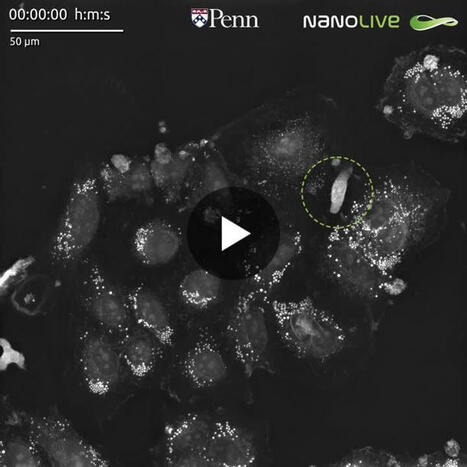
To build better cancer immunotherapies, we need to understand why T cells sometimes fail to kill cancer cells—even when they successfully recognize them.
I've spent years capturing videos of killer T cells attacking cancer cells under the microscope. The successful attacks are dramatic, but I've always found the failures just as fascinating.
About halfway through this video, there's an unsuccessful attack. Can you spot it?
What went wrong? Did the T cell fail to deliver a lethal hit? Did the cancer cell repair the damage? Or did it resist the signals that normally trigger cell death?
Engineering a T cell to recognize a cancer cell is only the beginning. The mechanism of killing it is a complex, multistep process, and cancer cells have evolved ways to resist.
I think there's an enormous opportunity to combine live-cell microscopy with AI-driven analysis to study thousands of these interactions, identify patterns of success and failure, and uncover what makes some T cells more effective killers than others.
Ultimately, could we use that knowledge to engineer better cancer-killing T cells? | 14 comments on LinkedIn
|
|
Scooped by
Gilbert C FAURE
October 24, 4:14 AM
|
Just published in Nat Med!
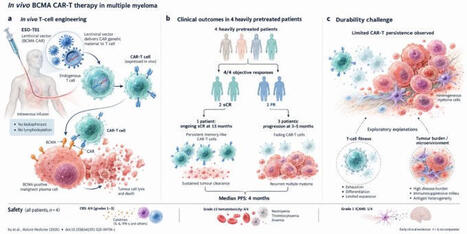
“Extended follow-up of in vivo BCMA CAR-T therapy in relapsed/refractory multiple myeloma”
In vivo CAR-T can generate deep responses without leukapheresis or lymphodepletion, but durability remains the critical hurdle.
In four heavily pretreated patients with myeloma, all with bulky extramedullary disease, ESO-T01 achieved 100% response: two stringent complete responses and two partial responses. One patient remained in stringent complete response at 15 months; the other three progressed within 3–5 months and subsequently died. Median PFS was 4 months.
The simplified treatment process still carried substantial toxicity: all four patients developed CRS and grade ≥3 hematotoxicity; one developed grade 1 ICANS. No new ESO-T01–related safety signals emerged during follow-up, although four patients cannot establish long-term safety. The fatal HLH-like syndrome occurred after subsequent salvage ex vivo CAR-T.
The development message: feasibility is demonstrated; durable disease control remains unproven. Limited CAR-T persistence and exploratory differences in T-cell fitness point toward priorities for optimization, rather than evidence of a class-wide limitation.
https://lnkd.in/dq9uhdgr
|
|
Scooped by
Gilbert C FAURE
October 22, 3:57 AM
|
Nearly a year of B-cell evolution after vaccination
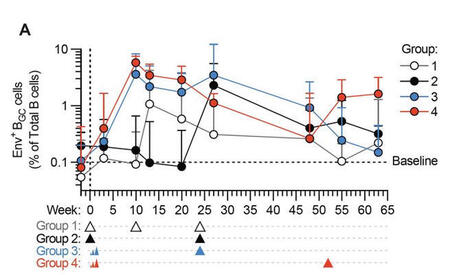
Germinal centers (GCs) are where B cells evolve through somatic hypermutation and selection, improving antibody affinity and generating the memory B cells and plasma cells that underpin long-term immunity. In a 2022 Nature paper, we demonstrated that germinal centers could persist for at least 6 months after a single priming immunization regimen.
Our new bioRxiv preprint extends that duration to nearly an entire year—and reveals some fascinating new aspects of how B cells evolve over time.
We followed 32 rhesus macaques across four vaccination regimens for over a year, repeatedly sampling lymph nodes, blood, and bone marrow. In total, we sequenced nearly 200,000 B cells, including GC B cells, memory B cells, and plasma cells.
Three major findings:
1. Germinal centers can persist for nearly a year after vaccination.
Large GC responses persisted for up to 48 weeks without additional immunization, nearly doubling the duration previously demonstrated for primary vaccine-induced GCs.
2. The pace of B-cell evolution slows dramatically over time.
GC B cells continued accumulating mutations throughout these prolonged responses. However, the rate of somatic hypermutation declined approximately three-fold after the first 9 weeks. B cells accumulated approximately as many mutations in the first 9 weeks as they did over the subsequent 39 weeks. This pattern was observed regardless of vaccination strategy or booster timing.
3. Germinal centers continue generating plasma cells throughout their lifespan.
By analyzing more than 8,000 vaccine-induced bone marrow plasma cells, and using somatic hypermutation rates as a molecular clock, we found evidence of continued plasma cell generation throughout the prolonged GC response.
Notably, delaying booster immunizations shifted the bone marrow plasma cell repertoire toward cells generated later in the response.
Why does this matter?
These results demonstrate that vaccine-induced GCs can remain active for nearly a year, but the dynamics of B-cell evolution change substantially over time. Furthermore, the timing of booster immunizations can influence which B cells ultimately contribute to the long-term antibody response.
These findings also have implications for HIV vaccine development. In July, we reported in Nature that sequential vaccination could successfully elicit HIV broadly neutralizing antibodies. Understanding the dynamics of GC responses and how booster timing influences B-cell evolution is important for improving those vaccination strategies.
Congratulations to Henry (Harry) Sutton PhD, Ester Marina Zárate, PhD, and our many outstanding collaborators at La Jolla Institute for Immunology, Scripps Research, and other institutions.
Our new preprint is linked in the first comment below.
#Immunology #Vaccines #GerminalCenters #BCells #VaccineResearch | 14 comments on LinkedIn
|
|
Scooped by
Gilbert C FAURE
October 20, 4:24 AM
|
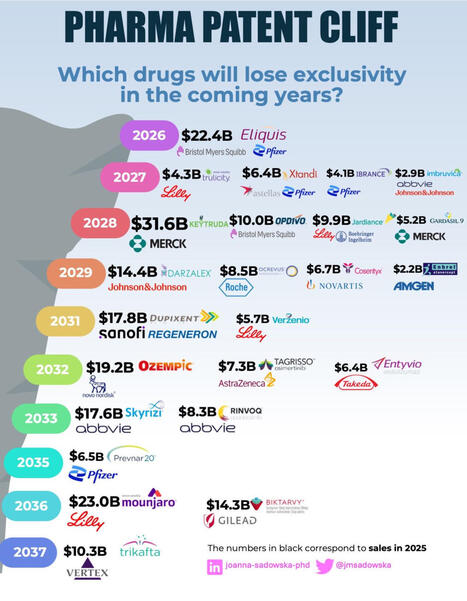
Pharma has around $300B in sales losing patent protection by 2030
Around 200 drugs are coming off patent, including nearly 70 blockbusters. For some companies the exposure is huge: an estimated 64% of Merck’s sales and 54% of Bristol Myers Squibb’s come from products losing exclusivity this decade.
What is interesting is to see how pharma is responding:
- Reformulation: Keytruda Qlex and Opdivo Qvantig move patients onto subcutaneous versions with longer patent protection; Qlex is covered to 2043.
- M&A: Deals reached $130B in H1 2026, almost as much as in the whole of 2025. Examples include AbbVie- Apogee Therapeutics, GSK-Nuvalent, Inc., Merck-Terns Pharmaceuticals, and Lilly’s multiple acquisitions.
- China: Chinese-originated molecules made up 40% of the assets big pharma in-licensed in 2025. In-licensing deals reached $92B in H1 2026, including AstraZeneca–CSPC Pharmaceutical Group and Bristol Myers Squibb–Hengrui Pharma
- Litigation: Settlements have pushed generic entry for Rinvoq, Biktarvy and Vyndamax years beyond their core patents.
Almost every big pharma company will lose revenue. The real question is who replaces it with assets that last beyond 2035.
Which strategy will pay off most: buying, licensing or reformulating?
*The infographic reflects US patent expiry and is not exhaustive. Sales are 2025 full-year figures from company reports.
----------
Hi! I am Joanna, and my friends call me Dr Jojo 🌸
Planning a clinical trial or looking to improve trial design and execution?
DM me - I’d love to connect.| 17 commentaires sur LinkedIn
|
|
Scooped by
Gilbert C FAURE
October 9, 1:12 PM
|
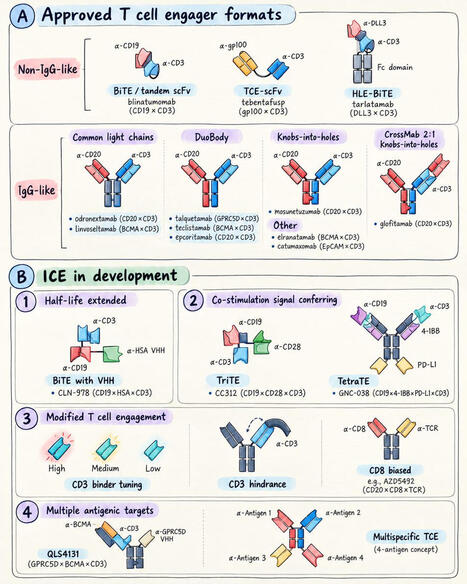
𝗡𝗲𝘅𝘁-𝗴𝗲𝗻𝗲𝗿𝗮𝘁𝗶𝗼𝗻 𝗶𝗺𝗺𝘂𝗻𝗲 𝗰𝗲𝗹𝗹 𝗲𝗻𝗴𝗮𝗴𝗲𝗿𝘀 𝗳𝗼𝗿 𝗕 𝗰𝗲𝗹𝗹 𝗱𝗲𝗽𝗹𝗲𝘁𝗶𝗼𝗻 𝗶𝗻 𝗮𝘂𝘁𝗼𝗶𝗺𝗺𝘂𝗻𝗲 𝗱𝗶𝘀𝗲𝗮𝘀𝗲𝘀
🧠 𝗔 𝗽𝗮𝗽𝗲𝗿 𝗮 𝗱𝗮𝘆 𝗸𝗲𝗲𝗽𝘀 𝗯𝗿𝗮𝗶𝗻 𝗱𝗲𝗰𝗮𝘆 𝗮𝘄𝗮𝘆 🧠
Friday, 9 October 2026
𝘐𝘮𝘮𝘶𝘯𝘦-𝘤𝘦𝘭𝘭 𝘦𝘯𝘨𝘢𝘨𝘦𝘳𝘴 (𝘐𝘊𝘌𝘴) 𝘳𝘦𝘥𝘪𝘳𝘦𝘤𝘵 𝘦𝘯𝘥𝘰𝘨𝘦𝘯𝘰𝘶𝘴 𝘪𝘮𝘮𝘶𝘯𝘦 𝘤𝘦𝘭𝘭𝘴 𝘢𝘨𝘢𝘪𝘯𝘴𝘵 𝘱𝘢𝘵𝘩𝘰𝘨𝘦𝘯𝘪𝘤 𝘉 𝘤𝘦𝘭𝘭𝘴 𝘢𝘯𝘥 𝘱𝘭𝘢𝘴𝘮𝘢 𝘤𝘦𝘭𝘭𝘴. 𝘛𝘩𝘪𝘴 𝘳𝘦𝘷𝘪𝘦𝘸 𝘦𝘹𝘱𝘭𝘰𝘳𝘦𝘴 𝘵𝘩𝘦𝘪𝘳 𝘮𝘰𝘭𝘦𝘤𝘶𝘭𝘢𝘳 𝘥𝘦𝘴𝘪𝘨𝘯, 𝘦𝘢𝘳𝘭𝘺 𝘤𝘭𝘪𝘯𝘪𝘤𝘢𝘭 𝘦𝘷𝘪𝘥𝘦𝘯𝘤𝘦 𝘢𝘯𝘥 𝘴𝘢𝘧𝘦𝘵𝘺 𝘵𝘳𝘢𝘥𝘦-𝘰𝘧𝘧𝘴.
🏗️ 𝗜𝗖𝗘 𝘀𝘁𝗿𝘂𝗰𝘁𝘂𝗿𝗲
• Bispecifics bridge target antigens to effector receptors, forming cytotoxic immune synapses.
• Formats span tandem antibody fragments and IgG-like molecules.
• Fc engineering extends half-life; weaker CD3 binding limits unintended activation.
⚙️ 𝗘𝗻𝗴𝗶𝗻𝗲𝗲𝗿𝗶𝗻𝗴 𝗳𝗼𝗿 𝘀𝗮𝗳𝗲𝘁𝘆 𝗮𝗻𝗱 𝗲𝗳𝗳𝗶𝗰𝗮𝗰𝘆
• Antigen arm: tune affinity, valency, epitope proximity and internalization.
• Effector arm: attenuate or shield CD3 binding to limit cytokine release.
• Pharmacokinetics: Fc or albumin binding prolongs exposure.
• Multispecifics: combine AND/OR targeting, CD28/4-1BB co-stimulation or CD8 bias.
🎯 𝗕-𝗰𝗲𝗹𝗹 𝗮𝗻𝗱 𝗽𝗹𝗮𝘀𝗺𝗮-𝗰𝗲𝗹𝗹 𝘁𝗮𝗿𝗴𝗲𝘁𝗶𝗻𝗴
• CD20×CD3 mosunetuzumab: lupus improvement in 4/6 patients.
• CD19×CD3 blinatumomab: arthritis improvement in 6/6 refractory patients.
• BCMA×CD3 teclistamab: 11/18 major responses, but 18/18 severe hypogammaglobulinaemia.
🔬 𝗦𝗲𝗹𝗲𝗰𝘁𝗶𝘃𝗲 𝗮𝘂𝘁𝗼𝗿𝗲𝗮𝗰𝘁𝗶𝘃𝗲 𝘁𝗮𝗿𝗴𝗲𝘁𝗶𝗻𝗴
• Autoantigen×CD3 engagers eliminated anti-β2-glycoprotein I B-cell clones in vitro.
• 9G4×CD3 selectively depleted autoreactive lupus B cells ex vivo.
• TRBV9×CD3 and hapten-adaptor designs explore clone-selective or modular targeting.
⚔️ 𝗪𝗵𝗶𝗰𝗵 𝗰𝗲𝗹𝗹𝘀 𝗱𝗼 𝘁𝗵𝗲 𝗸𝗶𝗹𝗹𝗶𝗻𝗴?
• Conventional T cells: CD3-driven killing, with CRS and exhaustion risks.
• γδ T cells: recruit circulating Vδ2 or tissue-resident Vδ1 populations.
• NK cells: CD16/NKp46 engagement; B-cell depletion demonstrated in primates.
• Myeloid cells: CD64/CD89 engagement promotes phagocytosis.
⚖️ 𝗪𝗵𝗲𝗿𝗲 𝗱𝗼 𝗜𝗖𝗘𝘀 𝗳𝗶𝘁?
• Monoclonal antibodies: established therapies, but Fc-dependent depletion sometimes spares tissue-resident B cells.
• ICEs: off-the-shelf, without cell manufacturing; durable remission and long-term safety remain uncertain.
• CAR-T: deeper tissue depletion and longer remissions so far, with more complex delivery.
❓ 𝗢𝗽𝗲𝗻 𝗾𝘂𝗲𝘀𝘁𝗶𝗼𝗻𝘀
• How much tissue and plasma-cell depletion is enough?
• Will CD8-biased or alternative effectors reduce toxicity?
• Will short ICE courses match CAR-T remission durability?
🔗 𝘓𝘪𝘯𝘬 𝘵𝘰 𝘵𝘩𝘦 𝘱𝘶𝘣𝘭𝘪𝘤𝘢𝘵𝘪𝘰𝘯 𝘪𝘯 𝘤𝘰𝘮𝘮𝘦𝘯𝘵𝘴
𝘐𝘭𝘭𝘶𝘴𝘵𝘳𝘢𝘵𝘪𝘰𝘯 𝘨𝘦𝘯𝘦𝘳𝘢𝘵𝘦𝘥 𝘸𝘪𝘵𝘩 𝘈𝘐 𝘴𝘶𝘱𝘱𝘰𝘳𝘵.
𝘛𝘩𝘦 𝘰𝘱𝘪𝘯𝘪𝘰𝘯𝘴 𝘴𝘩𝘢𝘳𝘦𝘥 𝘰𝘯 𝘓𝘪𝘯𝘬𝘦𝘥𝘐𝘯 𝘢𝘳𝘦 𝘮𝘺 𝘰𝘸𝘯.
|
|
Scooped by
Gilbert C FAURE
October 5, 9:47 AM
|
𝗛𝗼𝘄 𝗮 𝗦𝗰𝗶𝗲𝗻𝘁𝗶𝗳𝗶𝗰 𝗕𝗿𝗮𝗻𝗱 𝗞𝗲𝗲𝗽𝘀 𝗮 𝗩𝗮𝗰𝗰𝗶𝗻𝗲 𝗜𝗻𝗱𝘂𝘀𝘁𝗿𝘆 𝗔𝗹𝗶𝘃𝗲
✨ Innovation shines — even as time passes.
The global shift toward next‑generation mucosal vaccines has revealed a powerful truth:
𝗮 𝘀𝗰𝗶𝗲𝗻𝘁𝗶𝗳𝗶𝗰 𝗯𝗿𝗮𝗻𝗱 𝗶𝘀 𝗺𝗼𝗿𝗲 𝘁𝗵𝗮𝗻 𝗮 𝗽𝗿𝗼𝗱𝘂𝗰𝘁; 𝗶𝘁 𝗶𝘀 𝗮𝗻 𝗲𝗰𝗼𝘀𝘆𝘀𝘁𝗲𝗺.
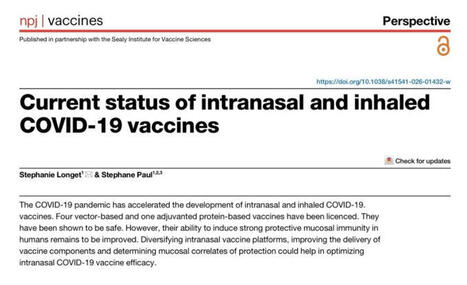
The recent npj Vaccines Perspective — “Current status of intranasal and inhaled COVID‑19 vaccines” — highlights a remarkable fact:
despite dozens of global attempts, only 𝗼𝗻𝗲 𝗮𝗱𝗷𝘂𝘃𝗮𝗻𝘁𝗲𝗱 𝗽𝗿𝗼𝘁𝗲𝗶𝗻‑𝗯𝗮𝘀𝗲𝗱 𝗶𝗻𝘁𝗿𝗮𝗻𝗮𝘀𝗮𝗹 𝘃𝗮𝗰𝗰𝗶𝗻𝗲 reached emergency authorization and entered high‑impact literature.
This single achievement proves something essential:
𝗮 𝘀𝘁𝗿𝗼𝗻𝗴 𝘀𝗰𝗶𝗲𝗻𝘁𝗶𝗳𝗶𝗰 𝗶𝗱𝗲𝗮, 𝘄𝗵𝗲𝗻 𝗯𝗿𝗮𝗻𝗱𝗲𝗱 𝗽𝗿𝗼𝗽𝗲𝗿𝗹𝘆, 𝗰𝗮𝗻 𝗸𝗲𝗲𝗽 𝗮𝗻 𝗲𝗻𝘁𝗶𝗿𝗲 𝗶𝗻𝗱𝘂𝘀𝘁𝗿𝘆 𝗮𝗹𝗶𝘃𝗲.
Across Nature Reviews Immunology, Signal Transduction and Targeted Therapy, and The Lancet Infectious Diseases, one message is clear:
𝗱𝗶𝘃𝗲𝗿𝘀𝗶𝗳𝗶𝗲𝗱 𝗽𝗹𝗮𝘁𝗳𝗼𝗿𝗺𝘀, 𝗺𝘂𝗰𝗼𝘀𝗮𝗹 𝗶𝗺𝗺𝘂𝗻𝗶𝘁𝘆, 𝗮𝗻𝗱 𝗶𝗻𝗻𝗼𝘃𝗮𝘁𝗶𝘃𝗲 𝗱𝗲𝗹𝗶𝘃𝗲𝗿𝘆 𝘀𝘆𝘀𝘁𝗲𝗺𝘀 𝗮𝗿𝗲 𝘁𝗵𝗲 𝗳𝘂𝘁𝘂𝗿𝗲.
This is exactly where 𝗥𝗮𝘇𝗶 𝗖𝗼𝘃 𝗣𝗮𝗿𝘀 stands as a compelling example.
🚀 Razi Cov Pars — When Innovation Becomes Legacy
🔹 𝗚𝗹𝗼𝗯𝗮𝗹 𝗿𝗲𝗰𝗼𝗴𝗻𝗶𝘁𝗶𝗼𝗻 𝗳𝗿𝗼𝗺 𝗮 𝗻𝗮𝘁𝗶𝗼𝗻𝗮𝗹 𝗶𝗻𝗻𝗼𝘃𝗮𝘁𝗶𝗼𝗻
Its presence in high‑impact literature transforms it from a domestic achievement into a scientific reference point.
🔹 𝗔 𝗽𝗿𝗼𝗽𝗿𝗶𝗲𝘁𝗮𝗿𝘆 𝗮𝗱𝗷𝘂𝘃𝗮𝗻𝘁 𝘁𝗵𝗮𝘁 𝘀𝗶𝗴𝗻𝗮𝗹𝘀 𝘁𝗲𝗰𝗵𝗻𝗼𝗹𝗼𝗴𝗶𝗰𝗮𝗹 𝗹𝗲𝗮𝗱𝗲𝗿𝘀𝗵𝗶𝗽
The RAS‑01 oil‑in‑water adjuvant has been repeatedly cited as a novel platform — proof that innovation can emerge anywhere.
🔹 𝗔 𝗯𝗿𝗮𝗻𝗱 𝘁𝗵𝗮𝘁 𝗱𝗼𝗲𝘀𝗻’𝘁 𝗳𝗮𝗱𝗲
When a scientific brand enters peer‑reviewed literature, it becomes part of the global narrative —
and science that enters the narrative never stops shining.
🌱 A Message to Young Scientists
𝗦𝗰𝗶𝗲𝗻𝗰𝗲 𝗶𝘀 𝗮 𝗹𝗼𝗻𝗴 𝗴𝗮𝗺𝗲.
Your work may take years to mature, but when it does, it becomes part of a legacy that outlives crises, trends, and headlines.
If one idea — born in a national institute — can reach global literature and influence future vaccine platforms,
then your idea can too.
Keep building.
Keep publishing.
Keep innovating.
✨ Because real science always finds its way to the light.
Stéphane Paul Stéphanie Longet
|
|
Scooped by
Gilbert C FAURE
September 29, 9:52 AM
|
Immune-based therapies have transformed the treatment of cancer and inflammatory and autoimmune diseases, but treatment is often suboptimal and the ability to predictably harness the immune system for new therapies remains limited. The pharmacology of immune-based drugs may be distinct from that of many traditional therapies. Here, I outline four principles of ‘immunopharmacology’ that provide a framework for understanding how the immune system responds to therapeutic perturbation. These principles may help to better define how immune-based therapies work and identify new opportunities for drugging the immune system.
|
|
Scooped by
Gilbert C FAURE
September 24, 4:15 AM
|
Two PI3K inhibitors have left the US market and two more lost indications to failed trials. Now gedatolisib and inavolisib are driving the class's best outcomes yet.
|
|
Scooped by
Gilbert C FAURE
September 23, 4:55 AM
|
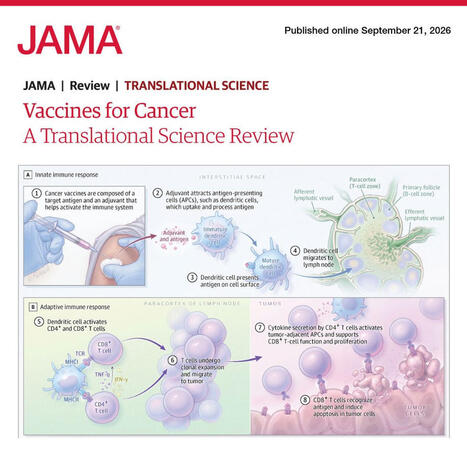
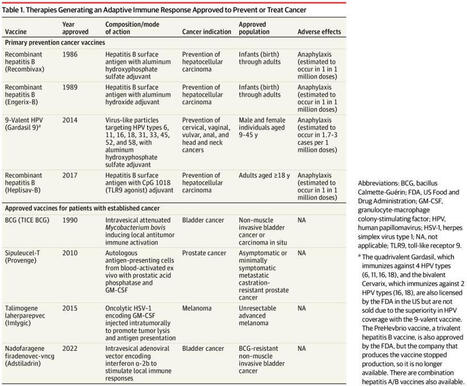
📝 #JAMAReview: #Cancer vaccines are being evaluated for treatment and prevention across multiple malignant neoplasms as advances in tumor immunology, antigen discovery, and vaccine delivery reshape the field.
This Review discusses how vaccines can stimulate adaptive immunity against neoantigens, nonmutated tumor proteins, or tumor-derived antigens, with current approved uses in melanoma, prostate cancer, and bladder cancer.
🔗 https://ja.ma/4y1RSCU
|
|
Scooped by
Gilbert C FAURE
August 25, 8:40 AM
|
🩻⚡ CE NE SONT PAS DEUX PATIENTS. C'EST LE MÊME, À QUELQUES SEMAINES D'INTERVALLE.
À gauche, un corps envahi. Chaque tache noire est une zone où le cancer dévore du sucre à toute vitesse.
C'est le principe du TEP-scan : on injecte un glucose radioactif 🧪, et les cellules les plus voraces s'allument. Les tumeurs, elles, sont insatiables. Elles se dessinent d'elles-mêmes. 🔥
À droite, presque plus rien. ✨
Entre les deux images, une seule intervention. On a prélevé les globules blancs du patient 🩸. On les a reprogrammés génétiquement 🧬 pour qu'ils reconnaissent enfin ce qu'ils ne voyaient pas. On les a multipliés par centaines de millions 🔢. Puis on les a réinjectés.
C'est la thérapie #CAR-T. 🚗🎯
Et ce n'est pas un médicament au sens habituel. Ça ne se dissout pas, ça ne s'élimine pas. Ce sont des cellules vivantes qui continuent de se diviser dans le corps et de chasser toutes seules. 🛡️🦠
Le patient devient son propre traitement. 💪
La médecine du futur n'est plus une promesse.
Elle est là, elle est vivante, et elle porte votre nom. 🚀
#CART #Immunothérapie #Oncologie #InnovationMédicale #Biotech #MédecineRégénérative #Cancer #RechercheMédicale #Santé #Science | 119 comments on LinkedIn
|
|
Scooped by
Gilbert C FAURE
August 19, 10:57 AM
|
"A small study showed preliminary evidence of activity in a peptide vaccine targeting KRAS mutations in pancreatic cancer.
I’ve written about an an mRNA-based pancreatic cancer vaccine that also targets KRAS, but this is a more traditional peptide vaccine, which can be used to target specific antigens on a cancer cell.
...
There is a lot of research on vaccines being used to treat cancer, and pancreatic cancer, which is difficult to treat, is one of the top priorities.
Although this study was quite small, it has a remarkable success rate of preventing cancer in individuals who had a high success rate.
This can be an important tool in fighting pancreatic cancer, one of the more dangerous cancers."
|
|
|
Scooped by
Gilbert C FAURE
November 5, 7:42 AM
|
📝 #JAMAReview: #Cancer vaccines are being evaluated for treatment and prevention across multiple malignant neoplasms as advances in tumor immunology, antigen discovery, and vaccine delivery reshape the field.
This Review discusses how vaccines can stimulate adaptive immunity against neoantigens, nonmutated tumor proteins, or tumor-derived antigens, with current approved uses in melanoma, prostate cancer, and bladder cancer.
🔗 https://ja.ma/3W8A9f6 | 11 comments on LinkedIn
|
|
Scooped by
Gilbert C FAURE
November 5, 4:01 AM
|
BCG at 100: The Paradox of an Indispensable Vaccine
A century after the first human received BCG, it remains the world's most widely administered — and most paradoxical — vaccine.
My Perspective in Indian Pediatrics explores four fundamental questions:
1. Has BCG become redundant for TB?
Against adult pulmonary TB — the engine of transmission — it has fallen critically short. Yet it reliably protects infants against TB meningitis and disseminated disease.
2. Can it be improved?
Recombinant variants and novel routes show promise, but programmatic constraints remain formidable.
3. Does BCG offer benefits beyond TB?
Through trained immunity, BCG reduces all-cause infant mortality, treats bladder cancer, and — in a striking new Johns Hopkins finding (Science Advances, 2026) — may reduce dementia risk by cutting tau deposits and neuroinflammation in the brain.
4. Is BCG still indispensable?
Yes. But insufficient. These are not contradictions — they are simultaneous truths that must anchor TB vaccine policy.
The first new TB vaccine licence may come as early as 2028–29. Until then, a timely birth-dose BCG remains non-negotiable.
📄 Indian Pediatrics, published online 22 October 2026
https://lnkd.in/gdmGyTUN
#Tuberculosis #BCGVaccine #TBVaccines #TrainedImmunity #Vaccinology #Pediatrics #PublicHealth
|
|
Scooped by
Gilbert C FAURE
October 24, 4:20 AM
|
𝗖𝗿𝗲𝗮𝘁𝗶𝗻𝗴 𝘁𝗵𝗲 𝗽𝗲𝗿𝗳𝗲𝗰𝘁 𝗰𝗮𝗻𝗰𝗲𝗿 𝗮𝘀𝘀𝗮𝘀𝘀𝗶𝗻 🎯
In this video, we see one CAR-T cell single-handedly killing 7 cancer cells in 7 hours! Triggering apoptosis after a brief interaction, the T cell swiftly migrates from target to target. Despite the T cell’s success, one cancer cell still manages to resist, and it is this variation that requires us to research and understand T cells better, to ensure the success of immunotherapies.
This video was captured using Nanolive’s label-free imaging platform, which allows the capture of dynamic cell behavior at high resolution, without phototoxicity.
You can replay our webinar to hear Dr Roddy O'Connor, Ph.D. from UPenn discuss this video and CAR-T engineering here: https://lnkd.in/dpKbZk7k
#Immunooncology #CART #CancerResearch
|
|
Scooped by
Gilbert C FAURE
October 24, 4:11 AM
|
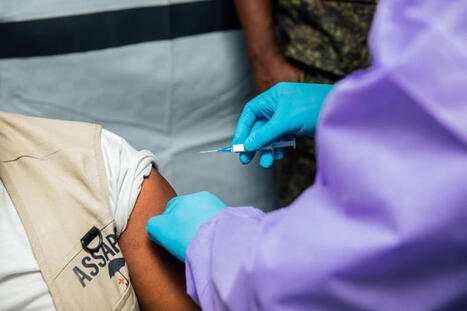
Science gives us hope. Today, in Bunia #DRC, the first participants were vaccinated in a new #Ebola vaccine trial called TUMAINI, which means “hope” in Swahili.
There is currently no approved vaccine against the Bundibugyo virus causing the outbreak. This trial will help us understand whether any of the vaccine candidates designed for Bundibugyo virus work.
In the meantime, the existing Everbo vaccine (licensed for use in preventing other Ebola virus disease) will be tested.
World Health Organization is supporting this DRC-led effort to find answers and save lives.
|
|
Scooped by
Gilbert C FAURE
October 21, 4:06 AM
|
Exosome therapy is an emerging area of regenerative medicine that has attracted interest from patients exploring options for tissue suppo...
|
|
Scooped by
Gilbert C FAURE
October 18, 7:19 AM
|
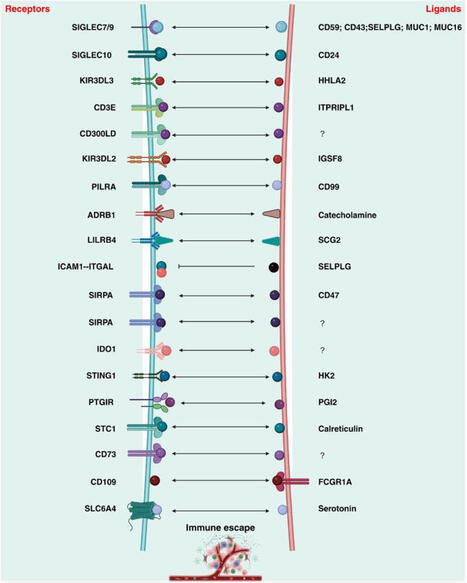
𝗜𝗺𝗺𝘂𝗻𝗲 𝗖𝗵𝗲𝗰𝗸𝗽𝗼𝗶𝗻𝘁 𝗜𝗻𝗵𝗶𝗯𝗶𝘁𝗼𝗿𝘀 𝗮𝗻𝗱 𝗜𝗺𝗺𝘂𝗻𝗼𝗺𝗼𝗱𝘂𝗹𝗮𝘁𝗼𝗿𝘀 𝗳𝗼𝗿 𝗖𝗮𝗻𝗰𝗲𝗿 𝗜𝗺𝗺𝘂𝗻𝗼𝘁𝗵𝗲𝗿𝗮𝗽𝘆: 𝗜𝗻𝘀𝗶𝗴𝗵𝘁𝘀 𝗜𝗻𝘁𝗼 𝗥𝗲𝘀𝗶𝘀𝘁𝗮𝗻𝗰𝗲 𝗮𝗻𝗱 𝗧𝗵𝗲𝗿𝗮𝗽𝗲𝘂𝘁𝗶𝗰 𝗦𝘁𝗿𝗮𝘁𝗲𝗴𝗶𝗲𝘀
F. Chen, Y. Yu, X. Cai, et al. “ Immune Checkpoint Inhibitors and Immunomodulators for Cancer Immunotherapy: Insights Into Resistance and Therapeutic Strategies.” Advanced Science 13, no. 25 (2026): e21355. https://lnkd.in/gyQAYKzt
My notes:
Emerging inhibitory checkpoints and other immune-suppressive pathways in the tumor microenvironment:
• 𝗜𝗻𝗵𝗶𝗯𝗶𝘁𝗼𝗿𝘆 𝗶𝗺𝗺𝘂𝗻𝗲 𝗿𝗲𝗰𝗲𝗽𝘁𝗼𝗿𝘀: SIGLEC7/9/10, KIR3DL3, KIR3DL2, PILRA, LILRB4 and SIRPα transmit inhibitory signals in relevant immune-cell populations.
• 𝗟𝗶𝗴𝗮𝗻𝗱𝘀 𝗮𝗻𝗱 𝗯𝗶𝗻𝗱𝗶𝗻𝗴 𝗽𝗮𝗿𝘁𝗻𝗲𝗿𝘀: HHLA2, CD24, CD47, IGSF8, CD99 and SCG2 participate in the illustrated inhibitory interactions.
• 𝗔𝗰𝘁𝗶𝘃𝗮𝘁𝗶𝗼𝗻 𝗺𝗮𝗰𝗵𝗶𝗻𝗲𝗿𝘆 𝘁𝗮𝗿𝗴𝗲𝘁𝗲𝗱 𝗯𝘆 𝘀𝘂𝗽𝗽𝗿𝗲𝘀𝘀𝗶𝘃𝗲 𝗶𝗻𝘁𝗲𝗿𝗮𝗰𝘁𝗶𝗼𝗻𝘀: CD3E belongs to the activating TCR–CD3 complex; interaction with ITPRIPL1 can suppress this signaling.
• 𝗠𝘆𝗲𝗹𝗼𝗶𝗱-𝗮𝘀𝘀𝗼𝗰𝗶𝗮𝘁𝗲𝗱 𝗶𝗺𝗺𝘂𝗻𝗲 𝘀𝘂𝗽𝗽𝗿𝗲𝘀𝘀𝗶𝗼𝗻: CD300LD supports suppressive myeloid-cell recruitment and function in tumors through the STAT3–S100A8/A9 pathway.
• 𝗠𝗲𝘁𝗮𝗯𝗼𝗹𝗶𝗰 𝗿𝗲𝗴𝘂𝗹𝗮𝘁𝗶𝗼𝗻: IDO1, CD73 and HK2 are enzymes involved in metabolic processes that can influence immune activity.
• 𝗔𝗱𝗱𝗶𝘁𝗶𝗼𝗻𝗮𝗹 𝗿𝗲𝗴𝘂𝗹𝗮𝘁𝗼𝗿𝘆 𝗽𝗮𝘁𝗵𝘄𝗮𝘆𝘀: STING1, STC1, SLC6A4, ADRB1 and PTGIR connect intracellular signaling, protein interactions, neurotransmitter transport and receptor signaling to context-dependent immune effects.
• 𝗔𝗱𝗵𝗲𝘀𝗶𝗼𝗻 𝗮𝗻𝗱 𝗿𝗲𝗴𝘂𝗹𝗮𝘁𝗼𝗿𝘆 𝗶𝗻𝘁𝗲𝗿𝗮𝗰𝘁𝗶𝗼𝗻𝘀: ICAM1/ITGAL, SELPLG and FCGR1A/CD109 participate in interactions that can influence immune-cell communication and function.
|
|
Scooped by
Gilbert C FAURE
October 6, 7:23 AM
|
Animal health is entering a new era of innovation. Veterinary medicines, vaccines, and technologies are advancing at a remarkable pace, resulting in breakthrough therapies and scientific discoveries across the industry.The same breakthroughs transforming medicine for people—including mRNA technology, monoclonal antibodies, wearable devices, and AI-driven drug discovery—are rapidly reshaping the future of animal health and welfare. Innovations that once seemed out of reach are now readily available, benefiting farmers, pet owners, and society as a whole.Despite these dramatic benefits, animal health accounts for just 0.6 percent of global health spending. That investment gap risks slowing one of the fastest-moving frontiers in medicine and delaying breakthroughs that benefit both animals and people. After all, animal health is not adjacent to human health but integral to it. As we explore new scientific frontiers, we are only beginning to see what's possible.Read More on OpinionWe don't have to imagine why these breakthroughs matter. The latest example is already here....New World screwworm—a parasitic fly that lays flesh-eating maggots in warm-blooded animals–has entered the United States, threatening farm animals, companion animals, and the nation's beef supply. Though previous outbreaks in Texas during the 1970s and the Florida Keys in 2016 were ultimately contained, the parasite's return has alarmed farmers and pet owners.Thankfully, we have powerful new tools to suppress this outbreak and others like it. Scientists are using gene-editing techniques—originally developed to help treat human diseases—to produce sterile flies that could stop the parasite's rapid reproduction. Novel pour-on treatments to prevent and treat screwworm are being deployed in southern border states, prioritizing prevention as the first line of defense. The USDA is funding some 40 research projects on experimental approaches to kill off screwworm.It's part of a much broader wave of innovation.Consider RNA technology. Animal health scientists have been leveraging it for more than a decade, including through a distinct approach known as RNA particle technology, which utilizes self-amplifying RNA. Novel vaccines for swine influenza, canine influenza, and feline leukemia use this specialized technology to design and deliver mRNA sequences, helping to secure the food supply and keep our pets healthy.Meanwhile, mRNA technology has dramatically accelerated vaccine development for both humans and animals. Researchers in Australia are looking into an mRNA vaccine for foot-and-mouth disease in cattle, further strengthening the fight against one of the world's most devastating livestock diseases. And in the United Kingdom, researchers are using mRNA technology to guard against the ongoing threat of avian influenza.Similarly, monoclonal antibody therapies—which have transformed care for people with cancer, autoimmune diseases, and other conditions—are now being used to treat mast cell tumors and melanomas in dogs, reduce severe itching caused by atopic dermatitis, and relieve pain from osteoarthritis.The same sorts of monitoring tools that help people track their steps, heart rate, sleep, and blood oxygen content have spread to animal health, too. Farmers now rely on smart monitoring collars and ear tags—technologies designed to detect behavioral changes that could identify potential diseases in cattle before they show symptoms. These tools enable farmers and veterinarians to intervene early, before animals get seriously ill and require more expensive treatments or euthanasia. These technologies are increasingly moving beyond animal identification and monitoring to help livestock producers improve farm productivity and manage operations more efficiently.As advanced therapies become more effective and data-driven tools provide real-time health insights, the industry is shifting toward a more proactive model of care, resulting in better outcomes for animals and the people who care for them. That's significant for humans, too. Roughly 75 percent of emerging infectious diseases that afflict humans originate in animals. Healthier animals mean healthier people.Animal health also underpins global food security, sustainability, and international stability. A recent report from the Organization for Economic Co-operation and Development found that eliminating global undernourishment would require a 15 percent increase in agricultural productivity. Innovation doesn't just flow in one direction. Discoveries made by veterinary scientists often have potential applications in human medicine. Consider ivermectin, which was first developed for veterinary use before the human formulation became one of the world's most successful treatments for river blindness and lymphatic filariasis, improving millions of lives across the globe.As the return of the New World screwworm shows, animal diseases aren't just concerns for farmers and veterinarians. Animal health progress is human health progress. It's time our investment reflected that reality.Robert Kelly is senior vice president, global marketing and operations, Merck Animal Health.The views expressed in this article are the writer’s own.
|
|
Scooped by
Gilbert C FAURE
October 2, 4:06 AM
|
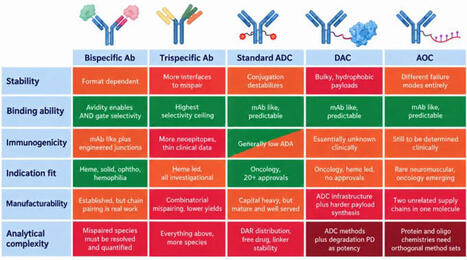
If you work in biologics, save this one for later.
Antibodies can do far more than stimulate the immune system. Look how adaptable they have become!
We often think of a standard monoclonal antibody as a molecule that binds a target, blocks a pathway, or recruits an immune response.
But the antibody is becoming a much broader therapeutic tool.
Change its architecture or attach a payload, and it can:
• Engage two or three targets at once
• Deliver a cytotoxic drug
• Carry a protein degrader
• Transport an oligonucleotide into a specific tissue
• Add another layer of selectivity to treatment
That is a remarkable range from one molecular scaffold.
Sure, some of these modalities are in the early days of development, but the potential is there.
The next generation of antibodies may be defined as much by what they carry and coordinate as by what they bind.
Anything else you'd add? | 16 comments on LinkedIn
|
|
Scooped by
Gilbert C FAURE
September 26, 8:53 AM
|
Review of Vaccines for Cancer
|
|
Scooped by
Gilbert C FAURE
September 24, 3:09 AM
|
Un post de l’ANRS MIE s’annonçant les résultats de notre étude sur la réponse à long terme de notre candidat vaccin anti VIH. Un nouvel essai est en cours de préparation et devrait débuter mi 2027
|
|
Scooped by
Gilbert C FAURE
September 4, 11:05 AM
|
A new Nature Review from Bali Pulendran asks a fundamental question for vaccinology: Are we still defining vaccine-induced protection too narrowly?
For decades, vaccine development has relied heavily on antibody titres as correlates of protection. But human immunity is far more complex.
In this Review, Bali describes how systems vaccinology is revealing a different picture: protection emerges from integrated immune programs involving antibodies, T cells, innate immunity, baseline immune states, metabolism, the microbiome and tissue-level interactions.
Perhaps most importantly, the paper takes the discussion beyond discovery science.
If there are multiple roads to protection, how should we design clinical trials? What should count as a correlate of protection? And how can systems-level evidence eventually become useful to regulators and vaccine developers?
This is not simply about generating more omics data. It represents a potential shift from asking:
“How high is the antibody response?”
to:
“What architecture of immunity actually produces durable protection in humans?”
These are exactly the kinds of questions we hope to explore at VIF World 2027.
We are very happy to have Bali Pulendran joining us again on our SAB and, even more importantly, working with us to co-design this part of the scientific program for VIF World 2027 in Shanghai.
Looking forward to seeing where this discussion takes us.
https://lnkd.in/gUtF6_7R
#Vaccines #Immunology #SystemsVaccinology #VaccineDevelopment #VIFWorld2027
|
|
Scooped by
Gilbert C FAURE
August 21, 4:44 AM
|
I am pleased to announce that "𝐓𝐡𝐞 𝐪𝐮𝐞𝐬𝐭𝐢𝐨𝐧𝐬 𝐬𝐭𝐢𝐥𝐥 𝐟𝐚𝐜𝐢𝐧𝐠 𝐯𝐚𝐜𝐜𝐢𝐧𝐞𝐬: 𝐄𝐱𝐩𝐞𝐫𝐭 𝐩𝐞𝐫𝐬𝐩𝐞𝐜𝐭𝐢𝐯𝐞𝐬 𝐟𝐫𝐨𝐦 𝐭𝐡𝐞 World Vaccine Congress 𝐖𝐚𝐬𝐡𝐢𝐧𝐠𝐭𝐨𝐧 𝟐𝟎𝟐𝟔" has now been published!
Thank you to Ashling Cannon and the Vaccine Insights team for highlighting some of our key speakers (Michael Osterholm PhD, MPH, Marion F. Gruber, Ph.D., MS, Rajinder Suri, Simon van Haren) and recognising their crucial contributions to the field!
Check out the article here: https://lnkd.in/exhnRKvQ
|
|
Scooped by
Gilbert C FAURE
August 17, 6:54 AM
|
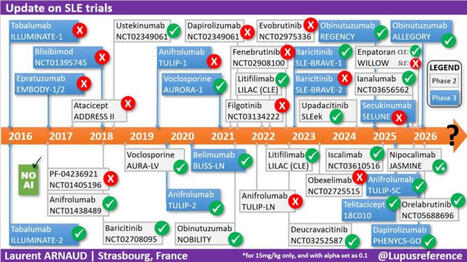
✅ 10 YEARS of RANDOMIZED TRIALS in #LUPUS ⏲️summarized on a single slide!!!! With a specific focus on phase 2(b) and 3 #RCTs, as well as whether the main endpoint was reached or not 👍 The least we can say, is that we have collectively put A LOT OF EFFORT in the development of new treatments 💊 in #SLE. As always I used only my natural intelligence (#NoAI) so please let me know if I have forgotten a trial or if something needs to be corrected.
|