Your new post is loading...

|
Scooped by
Roland Schegg
Today, 2:10 PM
|
Expedia Group is significantly expanding its use of AI to improve marketing effectiveness, traveler engagement, and internal productivity. The company is embracing generative AI platforms as new distribution channels while transforming its SEO approach toward answer engine optimization and organic traffic strategy.
Internally, AI accelerates creative production, improves experimentation velocity, and supports decision-making—while requiring a strong focus on accuracy and reliability. Leadership emphasizes curiosity, adaptability, and a growth mindset to navigate rapid change and maintain competitive advantage.
|
|
Scooped by
Roland Schegg
Today, 10:24 AM
|
Intermediaries such as Expedia and Booking.com have formed partnerships with artificial intelligence (AI) providers, creating uncertainty about the future of hotel distribution.
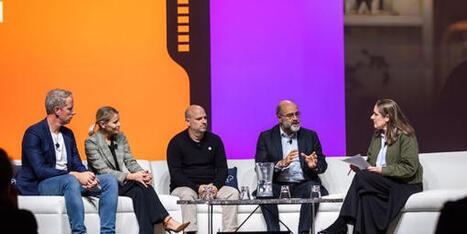
At The Phocuswright Conference, Kristie Goshow, former chief commercial officer of Peregrine Hospitality, Jean-Jacques Morin, group deputy CEO of Accor, Adam Harris, CEO of Cloudbeds, and Lennert de Jong, CEO of citizenM Hotels, touched on search’s evolution with AI and what it means for hotels.
"We're all worrying about—are we going to get disintermediated?” said Goshow.
De Jong said that the distribution game has been “a bit of a lost battle” for hotels on the whole.
|
|
Scooped by
Roland Schegg
Today, 3:41 AM
|
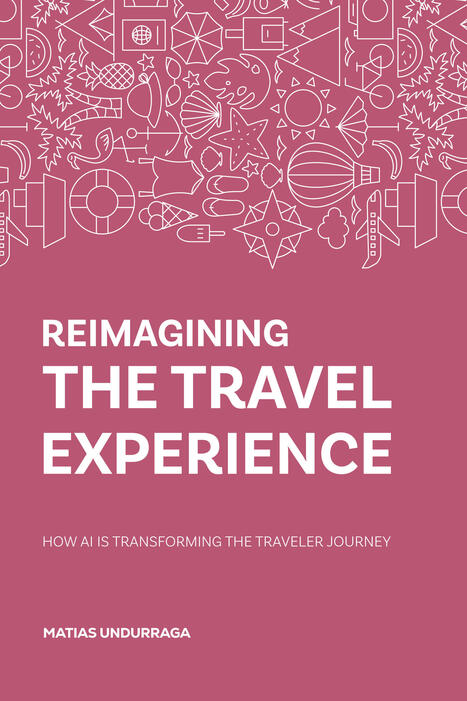
The travel and hospitality industry is experiencing unprecedented transformation driven by artificial intelligence and emerging technologies. From intelligent booking systems and personalized travel experiences to optimized operations and customer service automation, AI is reshaping every touchpoint of the travel journey.
This comprehensive guide explores how travel and hospitality organizations can leverage AI to create more personalized guest experiences, optimize operational efficiency, and build stronger connections between travelers, service providers, and destinations. Through real-world case studies and practical implementation strategies, we examine the full spectrum of AI applications across the travel and hospitality ecosystem.
Whether you're a technology leader at a travel company, a hotel executive looking to optimize guest operations, or a business strategist planning for the future of travel technology, this book provides actionable insights to successfully navigate the AI-powered transformation of travel and hospitality.
|
|
Scooped by
Roland Schegg
December 5, 11:30 AM
|
"Anthropic just released Anthropic Interviewer, a Claude-powered research tool that conducts and analyzes qualitative interviews at scale — debuting with findings from 1,250 professionals on how they’re navigating AI in their work. The details: Anthropic Interviewer handles the full research pipeline: planning questions, running 10–15 minute conversations, and clustering themes for human analysts."
|
|
Scooped by
Roland Schegg
December 5, 5:59 AM
|
Developer Advocate chez Google Cloud, Guillaume Laforge propose son panorama de ce qui fonctionne vraiment dans les architectures d’agents IA. Pour celui qui contribue à la fois à des frameworks IA et à la structuration de communautés de développeurs, le sujet dépasse largement le simple effet de mode et mène à une transformation en profondeur de la manière dont on conçoit des systèmes intelligents. Patterns, anti-patterns… Comment construire un système fiable et déconstruire des idées déjà reçues.
|
|
Scooped by
Roland Schegg
December 5, 3:34 AM
|
"A PMS here, a CRM there, an upselling software somewhere… and none of them talk to each other.
As a result, team members need to manage several platforms, money is being wasted, data is not flowing correctly, and revenue opportunities are being lost.
And when a new tool appears, hotels face the same question: Should we integrate it or replace what we have? The choice can either improve your tech stack or delay you even more."
|
|
Scooped by
Roland Schegg
December 5, 1:23 AM
|
As AI becomes more ubiquitous, reports show growing gaps both in digital skills and access to resources needed to thrive in this new world. The rapid scale and pace of change also make it more critical to understand not just who is adopting new technologies, but how we are using them and who is truly benefiting.
Addressing these challenges is central to the work of Cisco’s Digital Impact Office, which is dedicated to expanding digital inclusion and connecting more people to the global digital economy. As part of our commitment, we also partnered with the Organisation for Economic Cooperation and Development (OECD) to create the Digital Well-being Hub, which dives deeper into the complex relationships between AI and digitization as well as their impact on people’s lives and well-being.
|
|
Scooped by
Roland Schegg
December 3, 3:32 AM
|
Travelers in the United States are increasingly turning to generative AI tools like ChatGPT and Google’s AI-powered search features to plan their trips. According to new research from Phocuswright, nearly four in 10 travelers used AI for trip research in the past year — an 11-point rise that signals a meaningful shift away from traditional search. Younger, higher-spending travelers are leading this transition, using AI not only for inspiration but also to make concrete travel decisions. While trust in peer reviews and personal recommendations remains strong, AI has now reached parity with long-standing travel content sources.
|
|
Scooped by
Roland Schegg
December 3, 3:30 AM
|
Hotels are facing a distribution landscape where regulation, technology, and consumer behaviour are no longer aligned. The HSMAI Europe roundtable highlights how rate parity tensions, uneven regulatory enforcement, AI-driven commoditisation, and the rise of social commerce are reshaping competitive dynamics. Despite regulatory changes, OTAs still exert implicit power through algorithms, while AI platforms threaten to reduce hotels to price-driven listings. Hoteliers must rethink control, focusing on disciplined channel management, stronger direct booking foundations, and active management of price integrity across a fragmented ecosystem.
Key takeaways
The persistence of implicit parity: Even without formal parity clauses, OTA ranking algorithms pressure hotels to maintain aligned rates, limiting their ability to compete directly.
Uneven DMA enforcement: Booking.com faces gatekeeper obligations while Expedia does not, creating an imbalance rooted in quantitative thresholds rather than business practices.
Professionalised B2B distribution: Wholesalers like Hotelbeds now use strict rate controls, segmentation tools, and credential management to curb misuse and protect rate integrity.
AI-driven commoditisation risk: AI assistants may prioritise low price over brand value, weakening direct relationships and limiting hotels’ ability to differentiate.
|
|
Scooped by
Roland Schegg
December 3, 12:25 AM
|
The global OTA landscape is far larger and more uneven than most of the industry conversation suggests. At 10 Minutes Hotel, we have been conducting an extensive research project mapping every OTA we can identify and comparing them through one simple metric that offers a surprisingly clear signal. Estimated organic traffic. Although far from perfect, it provides an objective way to understand who actually drives demand at scale.
The early findings are eye opening. The public narrative about which platforms dominate is not aligned with the data. Airbnb generates a constant stream of headlines, yet it does not even break into the global top five OTAs by organic traffic. Expedia has long been considered the closest rival to Booking, but when looking only at the Expedia.com domain, its organic reach sits at about 41 million monthly visits. Booking.com, by contrast, reaches around 274 million.
|
|
Scooped by
Roland Schegg
December 2, 7:23 AM
|
"The arrival of artificial intelligence is introducing three profound disruptions in hotel distribution and the direct channel:
Conversational language. Many guests now prefer asking questions and receiving precise, multichannel answers instead of navigating long pages. Offering a fully conversational AI agent is increasingly important. Our AI agent Sarai meets this need.
Visibility in AI assistants powered by LLMs. Unlike Google Search, LLMs such as GPT, Gemini and Perplexity have not published official criteria for appearing organically in their results. Concepts like GEO or AIO are often mentioned, but the reality is that there is no clear or scientific methodology—everything comes from experimentation.
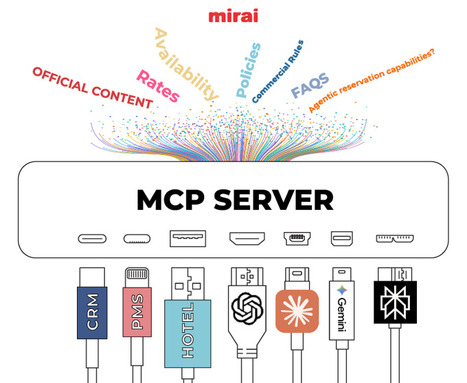
Official content and agentic capabilities. The strategic challenge for hotels is twofold: delivering official, verified and structured content to the AI assistants operating on these LLMs, and enabling agentic capabilities so assistants can take actions on behalf of the guest, such as completing a booking. Both objectives converge in a new component of the hotel tech stack: an MCP server."
|
|
Scooped by
Roland Schegg
December 1, 8:47 AM
|
Generative AI is transforming how travellers search, plan and book accommodation, and Booking.com is integrating these capabilities across its platform to improve both guest experiences and partner visibility. The company now supports nearly every step of the trip-planning process with AI tools, from conversational trip planning to auto-generated property responses and smarter search filters. Booking.com argues that GenAI is especially valuable for small and independent properties because it enables better matching between guest preferences and unique property attributes. To benefit from these systems, partners are encouraged to focus on rich content and authentic, review-worthy guest experiences.
Key takeaways
GenAI is now central to travel planning: Nearly half of all travellers use generative AI to plan trips, from basic recommendations to complex itinerary and safety considerations.
Booking.com has launched multiple AI-powered tools: Features such as the AI Trip Planner, Smart Filters, AI review summaries, and Property Q&A aim to streamline planning for travellers and responses for partners.
|
|
Scooped by
Roland Schegg
November 28, 9:07 AM
|
"Standing at a hotel reception desk, tired from travel, only to be told the system won’t let us into our room? In hospitality, technology is meant to streamline and elevate the guest experience, but what happens when it does the opposite? This article dives into the hidden emotional cost of tech failures in hotels, revealing how even the sleekest systems can backfire and why the human touch still matters more than ever.
Tech Trouble – Who’s to Blame?
For several decades, hotels and restaurants have been investing heavily in digitalizing their service to enhance guest experiences. Property Management Systems (PMS), mobile check-in, digital keys, and ordering apps now play a vital role at multiple touchpoints of the customer journey. Yet, technology remains a paradox: it can be both a source of efficiency and a source of frustration."
|
|
|
Scooped by
Roland Schegg
Today, 2:07 PM
|
"Generative and agentic artificial intelligence (AI) is poised to change how hotels are discovered, booked, and serviced — potentially altering the balance between suppliers and online travel agencies (OTAs).
Industry leaders at The Phocuswright Conference in San Diego argued that AI will create new booking entry points that allow hotels to connect more directly with travelers, reducing intermediaries’ dominance. Conversational interfaces like ChatGPT now centralize research, questions, and recommendations in a single flow, which could replace the fragmented experience of browsing dozens of websites before making a decision."
|
|
Scooped by
Roland Schegg
Today, 9:49 AM
|
COMMENT RENDRE SON SITE « IA-FRIENDLY »?
OpenAI et d’autres plateformes ont créé des standards pour faciliter l’exploration de votre contenu par les intelligences artificielles. Le principal outil : le fichier ai.txt, un équivalent moderne du robots.txt.
Ce fichier indique aux IA quelles pages elles peuvent explorer, lesquelles sont interdites, où se trouve votre sitemap et à quelle fréquence revisiter vos contenus. En ajoutant des métadonnées structurées (via Schema.org), vous rendez votre site beaucoup plus lisible pour une IA. Un hôtelier pourrait par exemple ajouter des données de type « Hotel » sur son site web, incluant le nom, l’adresse, les services offerts, les politiques d’annulation et la disponibilité saisonnière.
|
|
Scooped by
Roland Schegg
Today, 3:29 AM
|
Last month, Sam Altman sat down with economist Tyler Cowen and outlined how ChatGPT will transform hotel booking. Not someday. Now.
|
|
Scooped by
Roland Schegg
December 5, 10:25 AM
|
Generative and agentic artificial intelligence (AI) could shift the hotel distribution balance, and suppliers stand to benefit.
At The Phocuswright Conference in San Diego, Richard Holden, former general manager of Google Travel, Stephen Kaufer, founder and former CEO of Tripadvisor, and Sanjay Vakil, CEO and co-founder of DirectBooker, discussed how AI is changing the “front door” of hotel booking.
According to Holden, AI is likely to change travel aggregators' power and position. "I do think new front doors are going to be created here," Holden said. "From a supplier perspective, that's an opportunity to change the dynamic that's existed for the past 20 years.”
In many ways, Holden said suppliers were outmaneuvered by online travel agencies (OTAs) in terms of maximizing entry points with travelers. Now, there's an opportunity for suppliers to connect with consumers more directly.
|
|
Scooped by
Roland Schegg
December 5, 3:40 AM
|
Metasearch is evolving beyond price: Skyscanner is repositioning itself from a transactional comparison tool to an inspiration-driven discovery platform.
AI will power earlier-stage influence: The company plans to use LLMs and smarter content layers to guide travelers before they know when or where they want to go.
Discovery beats discounting: Hotels that lean into storytelling, visuals, and thematic experiences will gain visibility before travelers reach the rate-comparison mindset.
Data quality is becoming competitive: AI-powered discovery tools rely heavily on clean, structured hotel content — from photos to amenity data to room naming.
Hoteliers must act now: Five concrete steps — from content upgrades to offers to direct booking UX — position hotels to win in the new inspiration economy.
|
|
Scooped by
Roland Schegg
December 5, 1:25 AM
|
"Cisco's AI Readiness Index measures how global companies are preparing for AI - and, for the first time, links readiness to real business value."
|
|
Scooped by
Roland Schegg
December 3, 3:33 AM
|
"Google is positioning deep personalization as its strongest competitive advantage in the AI race, arguing that its broad ecosystem allows its models to “know” users better than any rival. Executives say this data-driven approach enables more useful, subjective recommendations that adapt to a user’s preferences across Gmail, Search, Maps, Photos, and other services.
The strategy, however, blurs the line between assistance and surveillance, as more personal data flows into AI products like Gemini and Deep Research. The article highlights Google’s effort to make personalization transparent, even as questions grow about consent, data boundaries, and the future of privacy in an AI-centric environment."
|
|
Scooped by
Roland Schegg
December 3, 3:31 AM
|
Hotels face a shifting landscape: more travel planning is starting via conversational AI assistants rather than traditional search engines, threatening to disrupt visibility and control over bookings. The article argues that a new standard — the Model Context Protocol (MCP) — can act as a “bridge,” enabling hotels to supply verified data and even allow AI-assistants to make bookings on their behalf. By adopting MCP and organizing their content and rates into a central, structured database, hotels can position themselves to thrive in a future where guest conversations, not searches, drive bookings.
|
|
Scooped by
Roland Schegg
December 3, 2:12 AM
|
Entre panique du “Zéro Clic” et buzzword marketing, on va essayer de faire le tri !
On en parle depuis des mois, on l’a vu arriver aux États-Unis… Ça y est, AI Overview et ses résumés générés par IA directement dans Google est à nos portes. Mais pour comprendre ce qui se joue, il faut d’abord prendre un peu de hauteur.
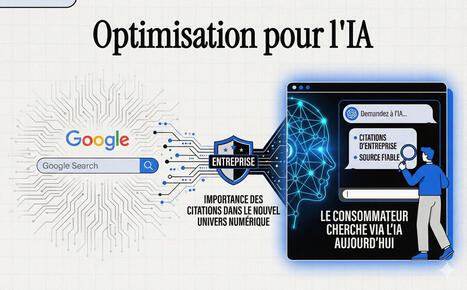
C’est depuis l’arrivée de ChatGPT, Perplexity ou Bing Copilot que la manière de chercher a fondamentalement changé. L’utilisateur n’explore plus le web, il converse avec lui. On ne tape plus des mots-clés mais on pose des questions.
On est passé du “moteur de recherche” au “moteur de réponse”. Mais si ces challengers ont ouvert la voie, le vrai séisme arrive maintenant. Pourquoi ? Parce que le patron entre dans la danse…
|
|
Scooped by
Roland Schegg
December 2, 2:52 PM
|
Museum leaders and AI developers gathered at UNESCO General Conference to imagine how artificial intelligence can transform the way we experience our shared heritage at an event held by UNESCO in partnership with the Uzbekistan Arts and Culture Development Foundation (ACDF) and with support from the Guimet National Museum of Asian Arts and the French Ministry of Culture.
|
|
Scooped by
Roland Schegg
December 1, 10:30 AM
|
Disponible uniquement sur la version desktop, la fonctionnalité, propulsée par l’IA, reprend le même principe que celle dédiée aux podcasts, qui a largement contribué au succès de NotebookLM ces derniers mois.
D’abord conçue pour les étudiants, les chercheurs et les professionnels, Audio Overviews est capable d’ingérer des sources dans plusieurs formats (PDF, texte, graphiques, extraits audio, enregistrements vocaux, vidéos YouTube, etc.) pour les convertir en une vidéo explicative, « composée de diapositives commentées par l’IA », précise Google dans une page d’aide, et dont le sujet et la trame sont définis dans le prompt. En plus de condenser et synthétiser les informations pour pondre un contenu « clair et digeste », Audio Overviews peut extraire des images, des diagrammes, des citations ou des chiffres provenant de vos sources pour illustrer la vidéo. « Cela fait [des Video Overviews] un outil particulièrement efficace pour expliquer des données, démontrer des processus et rendre des concepts abstraits plus concrets », soulignait Google lors du lancement.
|
|
Scooped by
Roland Schegg
November 30, 7:43 AM
|
The travel industry stands at an inflection point. Artificial intelligence is fundamentally reshaping how people discover, plan, and book their journeys, and destination marketing organisations find themselves caught between two futures: one where they become irrelevant intermediaries, and another where they evolve into essential architects of the places they represent.
|