ABSTRACT Wild ducks and gulls are the major reservoirs for avian influenza A viruses (AIVs). The mechanisms that drive AIV evolution are complex at sites where various duck and gull species from multiple flyways breed, winter, or stage. The Republic of Georgia is located at the intersection of three migratory flyways: the Central Asian flyway, the East Africa/West Asia flyway, and the Black Sea/Mediterranean flyway. For six complete study years (2010 to 2016), we collected AIV samples from various duck and gull species that breed, migrate, and overwinter in Georgia. We found a substantial subtype diversity of viruses that varied in prevalence from year to year. Low-pathogenic AIV (LPAIV) subtypes included H1N1, H2N3, H2N5, H2N7, H3N8, H4N2, H6N2, H7N3, H7N7, H9N1, H9N3, H10N4, H10N7, H11N1, H13N2, H13N6, H13N8, and H16N3, and two highly pathogenic AIVs (HPAIVs) belonging to clade 2.3.4.4, H5N5 and H5N8, were found. Whole-genome phylogenetic trees showed significant host species lineage restriction for nearly all gene segments and significant differences in observed reassortment rates, as defined by quantification of phylogenetic incongruence, and in nucleotide sequence diversity for LPAIVs among different host species. Hemagglutinin clade 2.3.4.4 H5N8 viruses, which circulated in Eurasia during 2014 and 2015, did not reassort, but analysis after their subsequent dissemination during 2016 and 2017 revealed reassortment in all gene segments except NP and NS. Some virus lineages appeared to be unrelated to AIVs in wild bird populations in other regions, with maintenance of local AIVs in Georgia, whereas other lineages showed considerable genetic interrelationships with viruses circulating in other parts of Eurasia and Africa, despite relative undersampling in the area. IMPORTANCE Waterbirds (e.g., gulls and ducks) are natural reservoirs of avian influenza viruses (AIVs) and have been shown to mediate the dispersal of AIVs at intercontinental scales during seasonal migration. The segmented genome of influenza viruses enables viral RNA from different lineages to mix or reassort when two viruses infect the same host. Such reassortant viruses have been identified in most major human influenza pandemics and several poultry outbreaks. Despite their importance, we have only recently begun to understand AIV evolution and reassortment in their natural host reservoirs. This comprehensive study illustrates AIV evolutionary dynamics within a multihost ecosystem at a stopover site where three major migratory flyways intersect. Our analysis of this ecosystem over a 6-year period provides a snapshot of how these viruses are linked to global AIV populations. Understanding the evolution of AIVs in the natural host is imperative to mitigating both the risk of incursion into domestic poultry and the potential risk to mammalian hosts, including humans.
Cann's Principles of Molecular Virology, - 7th Edition, revised by EP Rybicki. Print Book. ISBN 9780128227848. Now published!!
"Cann's Principles of Molecular Virology, Seventh Edition provides an easily accessible introduction to modern virology, presenting principles in a clear and concise manner. The new edition provides the history of virology and the fundamentals of the molecular basis of how viruses work.
The only wild specimens of a rare blue parrot, which were recently returned to their natural habitat, have been diagnosed with an incurable, likely lethal virus, Brazil's government told AFP Thursday.
Ed Rybicki's insight:
Beak and feather disease virus - for which we have just tested a plant-made RNA vaccine. Watch this space!
The importance of peripheral immunity in Alzheimer disease has gained much traction in recent years, mainly due to multiple genome-wide association studies identifying risk loci associated with genes expressed predominantly in the periphery.
Inside cells, RNAs and proteins form tiny, liquid-like droplets called biomolecular condensates. These droplets are essential for organizing cellular life, yet why some RNAs cluster more readily than others has remained unclear. Disruptions in condensate formation are linked to developmental defects, cancer, and neurodegenerative diseases.
The provided material outlines a molecular investigation into the five-amino-acid RLFRK sequence found within the SARS-CoV-2 Spike protein, which is present in both the virus and certain mRNA vaccines. The core hypothesis posits that this segment, located in the Receptor Binding Motif, could initiate T-cell mediated autoimmunity through molecular mimicry. Immunological evidence confirms that the RLFKRK sequence is both structurally exposed and efficiently processed and presented to T-cells following vaccination. Crucially, this viral peptide shares significant homology with essential human proteins, including Teneurin-4 (TENM4) and POMGNT1, which are important for proper neurological function. The investigation links this mechanism to individual genetic susceptibility by showing a computational prediction for strong binding to the HLA-DRB1*08:01 allele, an allele associated with autoimmune diseases like MS and SLE. Collectively, these findings establish a plausible mechanistic model for potential cross-reactive T-cell pathology in genetically predisposed individuals.
Content generated by AI and therefore may contain errors. Check the information before using it as a source.
Presentation generated from research sources using the NotebookLM tool.
Video edited with the Google VIDS tool based on audio generated in the NotebookLM tool (extracted from a video summary) and the presentation.
A research team at CiQUS (University of Santiago de Compostela, Spain) has unveiled an innovative molecular approach that enables anticancer drugs to reach the nucleus of tumor cells, where they can exert their therapeutic effect. The study focused on doxorubicin, a widely used chemotherapy agent. Prolonged exposure to this drug often leads to the emergence of resistant cells, a major clinical challenge that this strategy successfully overcomes while preserving the drug's antitumor activity.
In the ever-evolving realm of therapeutic development, humanization of monoclonal antibodies and nanobodies is an essential step that significantly enhances their clinical applicability.The process aims to modify these proteins derived from non-human species to resemble their human counterparts more...
This video explores how COVID-19 infection alters the oral and gut microbiota and how these microbial changes correlate with SARS-CoV-2 viral load during hospitalization. The study provides deep insight into the microbial dysbiosis observed in infected patients and its potential impact on disease severity, immune response, and recovery. By linking oral–gut microbial networks with viral persistence, this research opens new perspectives for microbiome-based diagnostics and therapeutic interventions in infectious diseases.
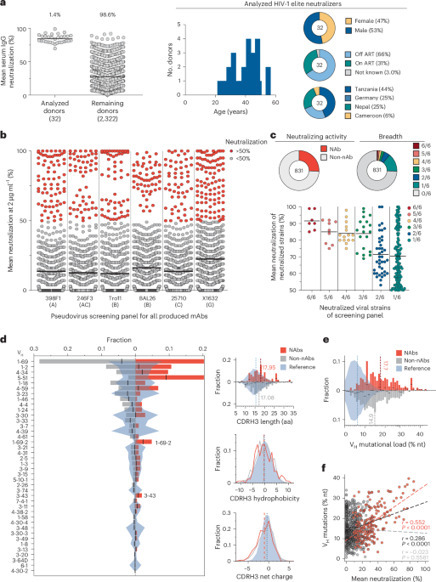
Klein and colleagues characterize 04_A06, a new VH1-2-encoded broadly neutralizing antibody that has marked breadth and potency against extended multiclade HIV-1 pseudovirus panels and can maintain full viral suppression in HIV-1-infected humanized mice.
In synthetic and structural biology, advances in artificial intelligence have led to an explosion of designing new proteins with specific functions, from antibodies to blood clotting agents, by using computers to accurately predict the 3D structure of any given amino acid sequence.
In an illuminating new study published in Nature Communications, researchers report groundbreaking insights into the immune responses against COVID-19 among people living with HIV.The work, emerging from the CoVPN 3008 study, identifies neutralizing and binding antibodies as critical correlates of...
L’étude montre que chez les personnes vivant avec le VIH, les niveaux d’anticorps neutralisants après vaccination ou infection antérieure sont fortement associés au risque de contracter la COVID-19. Elle confirme que ces anticorps peuvent servir de marqueurs fiables de protection, même si leur effet diminue avec le temps.
Voici quelques critiques de cette étude :
1- Population hétérogène Les participants vivant avec le VIH forment un groupe hétérogène en termes de contrôle immunitaire, de charge virale, de nombre de CD4+. Les auteurs le mentionnent eux-mêmes comme un facteur de variabilité possible.
On pourrait alors stratifier les analyses afin de comparer les différents termes évoqué juste au-dessus et ainsi voir si les corrélats d’anticorps fonctionnent de façon homogène dans tous les sous-groupes.
2- Durée de suivi La durée de protection observée reste relativement courte, ce qui limite la robustesse du “correlat de risque” comme prédicteur à long terme. Pour le groupe “Vaccine”, la corrélation entre titre d’anticorps neutralisants et réduction du risque de COVID-19 est observée jusqu’à 92 jours post-Peak et non jusqu’à 165 jours.
On pourrait alors justement observer cette corrélation jusqu’à 165 jours dans la mesure du possible.
3- Géographie homogène L’étude a été menée dans des pays d’Afrique de l’Est et d’Afrique australe (Botswana, Eswatini, Kenya, Malawi, Afrique du Sud, Ouganda, Zambie). Les résultats peuvent ne pas se transférer directement à des populations de PWH dans d’autres régions du monde.
On pourrait donc diversifier les populations étudiées en incluant d’autres participants vivant avec le VIH dans d’autres régions, avec d’autres comorbidités, d’autres traitements, pour évaluer la généralisation des résultats.
4- Manque de puissance / Nombre d’événements “breakthrough” limité, surtout sur certains sous-groupes Le nombre de cas SARS Cov-2 observés après vaccination dans l’analyse de corrélats reste modéré (152 cas dans le groupe “Hybrid" et 54 dans “Vaccine”).
On pourrait alors augmenter la taille d’échantillon / prolonger le suivi et les formes sévères pour améliorer la puissance statistique et mieux évaluer la durée de protection.
Imagine tiny machines, smaller than a virus, spinning inside cancer cells and rewiring their behavior from within. No surgery, no harsh chemicals, just precision at the molecular level.
Background/Objectives: Beak and feather disease virus (BFDV) is the causative agent of psittacine beak and feather disease (PBFD), affecting psittacine birds. There is currently no commercial vaccine or treatment for this disease. This study developed a novel BFDV coat protein mRNA vaccine encapsidated by TMV coat protein to form pseudovirions (PsVs) and tested its immunogenicity alongside BFDV coat protein (CP) subunit and DNA vaccine candidates. Methods: mRNA and BFDV CP subunit vaccine candidates were produced in Nicotiana benthamiana and subsequently purified using PEG precipitation and gradient ultracentrifugation, respectively. The DNA vaccine candidate was produced in E. coli cells harbouring a plasmid with a BFDV1.1mer pseudogenome. Immunogenicity of the vaccine candidates was evaluated in African grey parrot chicks. Results: Successful purification of TMV PsVs harbouring the mRNA vaccine, and of the BFDV-CP subunit vaccine, was confirmed by SDS-PAGE and western blot analysis. TEM analyses confirmed formation of TMV PsVs, while RT-PCR and RT-qPCR cDNA amplification confirmed encapsidation of the mRNA vaccine candidate within TMV particles. Restriction digests verified presence of the BFDV1.1mer genome in the plasmid. Four groups of 5 ten-week-old African grey parrot (Psittacus erithacus) chicks were vaccinated and received two boost vaccinations 2 weeks apart. Blood samples were collected from all four groups on day 14, 28 and 42, and sera were analysed using indirect ELISA, which showed that all vaccine candidates successfully elicited specific anti-BFDV-CP immune responses. The subunit vaccine candidate showed the strongest immune response, indicated by higher binding titres (>6400), followed by the mRNA and DNA vaccine candidates. Conclusions: The candidate vaccines present an important milestone in the search for a protective vaccine against PBFD, and their inexpensive manufacture could considerably aid commercial vaccine development.
Experts warn the H5 bird flu strain could spark a pandemic more severe than Covid-19 as global surveillance intensifies amid rising concerns. Find out what happened.
Despite the ubiquity of cats in modern homes, we still don't know many details about the timing and routes of early cat domestication and dispersal into Europe and beyond, aside from the common association of cats with ancient Egyptian culture.
You may not realize you’ve benefited from HIV research. But if you’ve received a treatment that was approved through a recent clinical trial, received a CAR T cell for your cancer, or even just taken Paxlovid, you have.
A cell can act in astonishingly complex ways. It must decide for itself whether to grow and multiply, rest, specialize, age or die. This applies just as much to mammalian cells as it does to seemingly simple microbes.
The COVID-19 pandemic has profoundly altered various aspects of healthcare delivery and disease epidemiology, with childhood asthma and wheezing disorders presenting a uniquely compelling case study within this transformative dynamic.
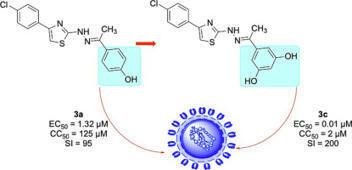
Our group has previously reported on (E)-4-(1-(2-(5-(4-chlorophenyl)thiazol-2-yl)hydrazono)ethyl)phenol (3a) as an antiviral agent against DENV with a…...
Viral diseases cause significant economic losses within the equine population. Horses are susceptible to equine coronavirus (ECoV) and severe acute respiratory syndrome coronavirus-2 (SARS-CoV-2), although only ECoV has been associated to clinical disease.
Broad-spectrum antiviral agent (BSAA) drugs are essential in the fight against viral, especially emerging, diseases.However, their development faces …...
A world-first study has proven microbes essential for human health can survive the extreme forces of space launch. The study has been published in npj Microgravity.
Recently, NASA revealed exciting details of new findings from Mars. Scientists have discovered tiny patterns of unusual minerals in the clay-rich rocks on the edge of Jezero Crater—an ancient lake once fed by Martian river systems, and the exploration site of the NASA Perseverance Rover.
To get content containing either thought or leadership enter:
To get content containing both thought and leadership enter:
To get content containing the expression thought leadership enter:
You can enter several keywords and you can refine them whenever you want. Our suggestion engine uses more signals but entering a few keywords here will rapidly give you great content to curate.


 Your new post is loading...